

Module 3
Intervention
4 hours 20 minutes · nine lessons
What you have covered so far
Module 1 made the case for having the conversation. Module 2 gave you the method: the integrated model, PLISSIT, Ex-PLISSIT and the 5A's, a full sexual history, and a plan.
Most lessons take an intervention named in the guidelines and show it being delivered, usually with both partners in the room. You watch the appointment, then go through what the clinician did and what you would say yourself.
Two couples and a single man dating again after treatment run through the module. You follow each of them across several appointments.





Learning outcomes
By the end of this module you will be able to:
- Plan intervention with a couple, including where the two partners want different things
- Introduce and stage sensate focus, and explain it to a couple with confidence
- Support the resumption of sexual activity, including both intercourse and outercourse
- Recognise and respond to a partner's own sexual health needs
- Explain the purpose and the limits of penile rehabilitation, and respond when a patient questions or resents the treatment
- Select pro-erectile therapies appropriately, and explain how each is used
- Describe the sexual effects of androgen deprivation therapy and plan support, including lifestyle modification
You will rehearse three times in this module. Each time a film stops mid-appointment and you choose what to say next, with feedback on every option. Knowledge checks run through the lessons, and other screens ask you to commit to an answer before you are shown one. Screens throughout give you a box to write a line of your own, and every lesson closes with one.
Module 3: Intervention
3.1 Working with a couple
30 minutes
3.1 Working with a couple
Doug and Jean, three months after surgery

Module 2 took the history from Doug and Jean before his surgery. This lesson meets them again three months afterwards, at the appointment where the assessment becomes a plan.
Doug had a radical prostatectomy three months ago, and he still has to wear a pad to manage incontinence, showers twice a day, and says the leaking makes him feel juvenile.
Jean describes what changed at home: they now sit at opposite ends of the couch and he gets up when she comes closer.
Doug has not been sexual since the procedure, and he gives two reasons for it. He is afraid that trying will end in failure, and he does not feel clean.
Jean has been giving him time, and neither of them has raised the subject at home.
3.1 Working with a couple
Working with a couple means two assessments
The appointment Doug and Jean are about to have contains two patients, not one. Guideline statements 22 to 27 set out psychosocial and couple interventions for both partners1.

The biopsychosocial frame used in the guidelines treats the man and his partner as the unit of care. It covers the physical, the psychological, the relationship and the social together. Module 2 introduced that model on this same couple, before Doug's surgery.
Why this works: Couples do better when they are encouraged to communicate and to support each other through recovery. The partner's own needs are part of the patient's care. Supporting them is described as critical to the couple recovering their sexual intimacy.
All of this rests on one condition. The patient and the partner both have to agree to the partner being included before couple work starts.
Guideline statement 24 makes partner inclusion conditional on the patient and the partner agreeing, and it covers referral for psychosexual treatment in the same sentence.
Patients and partners also arrive with optimistic expectations of what treatment will restore. Education is what moderates them2.
Take a goal and an expectation from each partner, then build the plan from what they have told you.
3.1 Working with a couple
How to ask each partner what they want from treatment
Ask each partner in front of the other and you get two answers. What you do next depends on whether the answers match, and both people hear them at the same time.
Jean can also tell you what Doug cannot: how his withdrawal looks from her point of view. She has her own account of what changed, and her own reason for holding back. Getting two answers rather than one depends on how you ask:
What to do
- Ask each person by name.
- Ask for what they want.
- Let the second person answer before you respond to the first.
- Take the partner's report as evidence, and check it with the patient.
Build an opening for the first few minutes with Doug and Jean. Add the lines you would use, in the order you would use them.
If one partner answers for both:
I'd like to hear that from you as well, Jean. What would you want if it were only up to you?
If a partner names a goal the other looks surprised by:
Is that new to you? What did you think Doug would say?
3.1 Working with a couple
How to build the plan from what the couple have already told you
You now have a goal from each of them. The rest of the plan comes from a worksheet Doug completed at home, on the treatments and the kinds of touch he would consider. The clinician reads his own answers back to him and proposes a starting point from inside them. The appointment then starts from their answers rather than from your suggestion:
What to do
- Set the task before the appointment, so the couple answer it together.
- Read their answers back, item by item.
- Propose a starting point they have already agreed to.
- Ask them to agree to it out loud.
Try:
SAY
- You've said you're open to oral sex, mutual stimulation and erotic massage, and that toys aren't for you.
- On the treatments, you'd try the tablets and you'd consider injections. You weren't sure about the vacuum device.
- The touch that doesn't involve penetration is where I'd start, because it's the part you've both already agreed to.
- Do you feel ready to take that step?
If the couple agree with a condition attached:
SAY
- What would need to change for you to feel ready?
As in the earlier modules, these phrasings are saved for you. You can find them in the conversation guide on the resources screen at the end of this module.
3.1 Working with a couple
Correcting expectations about the treatment
The plan includes an oral medication (tablets) Doug already has samples of at home. He expects it to work straight away, because that is what the advertising shows, and a weak first result may tell him the treatment has failed.
Correct the expectation before he tries, and keep the treatment as a valid option.
Read each pair across: the line to avoid, then the line to use.
Instead of
These should sort things out for you.
Say
Advertising sets this up as an instant fix. We know it might not work the first time you try it.
The first version promises a result you cannot promise.
Instead of
If they don't work, we'll try something else.
Say
It's still worth trying, and I'd like to know what happens when you do.
The first version tells him a weak first result means the tablet has failed.
Instead of
You'll know after the first go.
Say
This changes over months, so give it that long before you judge it.
One attempt is not a fair test of the tablet.
The next film is that appointment: the clinician reads the couple's answers back to them and proposes where to start.
Watch the plan being made
Doug and Jean, three months after surgery
The clinician reviews the worksheet the couple completed at home, proposes where to start, and asks them to agree to it.
Doug, Jean and the clinician
9:07hopefully the next time I see you, you'll notice a little bit more improvement. Okay. Okay. I'll do that. Excellent. So why don't we take a few minutes
9:15to review the homework we gave you last time around treatments for erectile function. Okay. So you've completed this worksheet.
9:24You've discussed with each other about what options might be appropriate for you. And if I'm looking over, it looks like, uh, a lot
9:31of the different kinds of sexual touch, it seems that you're open to trying some of those. Mm-hmm. So engaging in oral sex, mutual stimulation,
9:39using your hands, um, erotic massage, not interested in trying the sex toys. Um, and then when I look at the different treatments
9:48for erectile dysfunction, it sounds like you're open to oral medications. Mm-hmm. You would consider penile injections. Mm-hmm. And anything else on there?
10:01Um, You were unsure about vacuum erection device and you were thinking not not something you're interested in. Mm-hmm. Okay. Well, why don't we discuss then?
10:10Um, oral medications and injections are something that if we need, we can consider that. Okay. Have you discussed oral medications
10:20with your urologist? Um, yes. He's, uh, of course I know what they are. Uh, that's pretty obvious, but, um,
10:29He gave you a script, I think. Yes. Or give you a sample when we left the office. So you have some samples Our postop,
10:35and have you tried them yet, or no? No, we haven't. No. No. Okay. Um, but, but if we, uh, do
10:42what the TV says, they would be instant, Right? Yes. And we did talk about that before, right? It doesn't, yeah. That sometimes with advertising, it might,
10:50um, pro uh, propose this idea that this is an instant fix and Right. We know that this might not work when you try it. Mm-hmm.
10:58But it's certainly something you can try if you'd like to. Okay. Yeah. That, that's, that's easy. Um, oral pills are, they're not invasive.
11:09They're not, um, They don't hurt. Okay. Right. When I'm looking at the Yeah. They don't cause any damage or anything.
11:15In fact, they can promote healthy, um mm-hmm. Recovery. Some of the other ones, I'm wondering how uncomfortable they would be.
11:23Like something like the injections Mm-hmm. The injections or the, even the, the vacuum, uh, device, you know mm-hmm. Things
11:30Like this. Absolutely. Things that We, It seems awfully cumbersome and, um, yeah. It, it it's kind of impersonal and, um, yeah.
11:43I, I think there would be difficulties. Okay. Okay. So we can address those as they come up, but one of the things I'm thinking is you have your
11:52prescription, so you can certainly try that between now and the next time that I meet, meet you. Good. Yeah. Do that. But I'm do, I'm also thinking
11:58that you've, you've indicated on your list here that you are open to trying a lot of the different kinds
12:03of sexual touch that don't focus on intercourse or penetration. Mm-hmm. And so I think that might be a good place to start
12:11to help set you up for success. Do you guys feel like you're ready to take that next step to try to engage in some sexual touch?
12:21I, I, I think so. As, as long as, um, if I could improve a little bit better as I, as you say those exercises mm-hmm.
12:30If they would help, that would make me feel better about myself. Okay. If they are, um, if they make a significant difference.
12:39Absolutely. Okay. So hopefully that will improve with time. Mm-hmm. And, um, the other thing we can talk about is how
12:45to manage if you do have some urinary leakage. So have you, I, I know you're concerned about it feeling dirty
12:52or feeling, uh, kind of childlike. Yes. Have you checked out any of those concerns with your partner? Have you asked her what she thinks about that?
13:00No, not really, Except I know you're in the shower. Okay. But I mean, no, he hasn't particularly mm-hmm. And maybe I should have asked him more questions, Lauren.
13:17surgery. Mm-hmm. So There's, you're giving Him time. There's things, I'm giving him time, but, um, maybe I should have been a little more forthright
13:25And that's okay. These things aren't easy to talk about. Yeah. That's, so here you are talking about it today. Mm-hmm.
13:31That's good. That's Good. Mm-hmm. So to the important things to remember is that urine is, is essentially sterile. It's not, there's no harm to you Yeah.
Watch how the starting point comes from what Doug has already said yes to.
You are watching the extract from 09:13 to 12:55. The full session runs 16 minutes and is available in the resources at the end of this module.
Pause and choose · Doug and Jean
The film stopped before the clinician speaks again.
Doug has agreed to the plan, and he has said he feels unclean and juvenile with Jean in the room. He has not asked her what she makes of the leakage.
What do you do next? Choose one. There is a best answer here, and it is what the clinician actually said. The feedback explains what each of the other three options would do.
Choose one option.
Here is the feedback for the other options.
Now watch what the clinician asks, and what Jean says.
The film stops partway through, and you will choose what you would say at that moment.
3.1 Working with a couple
When one partner assumes what the other thinks
Doug had a worry about how the leakage would look to Jean, and he had never asked her. Jean might not be troubled by it at all. Until you ask, the plan is built on his guess. He is the one who has to put it to her:
What to do
- Ask the patient whether he has raised it with his partner.
- Ask him what he thinks she would say.
- Leave room for the partner to answer for herself.
Try:
SAY
- Have you asked Jean what she makes of it?
- What do you think she'd say if you did?
- Jean, is that how you see it?
If the patient says the subject is too hard to raise:
SAY
- It's a hard one to start. You've just done it here, with me in the room.
3.1 Working with a couple
Knowledge check
Doug's worksheet says he is open to non-penetrative touch and rules out toys. He would try the tablets he has samples of, would consider injections, and is unsure about a vacuum device. He wears a pad and says he does not feel clean.
Where do you start?
Choose one option.
3.1 Working with a couple
Think of an appointment where a patient brought their partner with them.
What did you ask the partner, in their own right?
Write down one question you would put to them next time.
3.1 Working with a couple
What you can do now
Which two will you use in your next appointment?
Choose up to two, and a space to write a note opens underneath. All of these are saved to your conversation guide either way.
Marked for your next appointment.
These are saved for you, with the phrasings from this lesson, in the conversation guide on the resources screen at the end of this module.
Module 3: Intervention
3.2 Rebuilding closeness after treatment
20 minutes
3.2 Rebuilding closeness after treatment
What worked and what did not, six months on
Doug tried the tablets his urologist had given him. They produced a headache and some congestion. He noticed a little more length and thickness in his penis, but no rigidity.
The rest of the plan worked. The couple are touching more, the affection came back, and Doug no longer needs a pad most of the time, though he still wears one for security.
Jean says the relationship is close to what it was before the surgery.
Even though the tablets didn't work, the overall plan did. Judge the plan by what the couple got as a result, rather than by whether the treatment worked.
The next film is that appointment. The clinician asks the couple whether the affection came back.
Watch what the couple noticed
Doug and Jean, six months after treatment
The clinician recalls what they told her last time, that the physical affection had gone along with the sex. She asks whether that changed.
Doug, Jean and the clinician
0:40Um, I know the last time we talked, you had mentioned that not only had you not engaged at all sexually,
0:46but that there was less physical affection in the relationship. Mm-hmm. Mm-hmm. And less time to cuddle and hug and kiss.
0:51Mm-hmm. Mm-hmm. Has that changed? Mm-hmm. I think it's been purposeful. Um, the talking to you helped and Yeah. Mm-hmm.
1:00It can be purposeful, but it's no less rewarding. Okay. Mm-hmm. And purposeful. So sometimes you have to be intentional about it.
1:08You have to kind of remind yourself that these are important parts of the relationship, Right? Mm-hmm. Mm-hmm. Okay. I, I still am is, uh, maybe it's my fault,
1:18but maybe I'm still not wanting to put a whole lot of pressure on, but even, um, showering together and, um, you know, masturbating is,
1:29or helping. Okay. Um, you did suggest using a towel. Mm-hmm. Something on the bed, um, things like this. So it's been very, it's been better.
Listen for Doug saying they set aside time for affection, and that it was still enjoyable.
You are watching the extract from 00:40 to 01:43. The full session runs 15 minutes and is available in the resources at the end of this module.
3.2 Rebuilding closeness after treatment
Desire does not always come first
Doug and Jean got the affection back before the wanting came back. That order is not an accident, and it is not what most people expect.

A patient tells you he has no interest in sex any more, and that he used to. What does the evidence say is most likely to bring his interest back?
Doug and Jean started with affection, and the wanting came back after it.
Most people assume desire must come before sex. On that account, wanting produces arousal, and arousal leads to sex. Masters and Johnson described the physical version of that sequence in 1966, and Kaplan put desire at the front of it in 1979.
Rosemary Basson broke the sequence in 20011. She argued that people in long-term relationships, and women in particular, often start from a neutral state rather than from wanting. What moves them is closeness, commitment, feeling attractive, or the wish to share physical pleasure. Sex begins, arousal follows, and desire arrives after the arousal rather than ahead of it.
That changes what you treat. If desire follows closeness, then getting a couple close again is the treatment, not the preparation for it. A couple who have stopped touching have not lost the ability to want sex. They have lost the thing that starts it.
Doug and Jean got the affection back first, and the rest of the plan followed it.
3.2 Rebuilding closeness after treatment
What closeness looks like for each patient
Ask a couple what closeness looks like and they name something they do. Ask whether they feel close and they answer yes or no.
Closeness looks different for each patient you see. Anthony is 62, single and recently divorced, and he was dating before his diagnosis. He comes back later in the module, in the lessons on penile rehabilitation and on prescribing a treatment. For him, closeness starts with deciding who to tell, and when. Ask him the same questions you would ask a couple, and one more about who he would tell:
What to do
- Ask what they were doing when they last felt close.
- Ask what they do now.
- Ask for an example rather than a category.
- Ask a single patient who he would be telling, and what he would say.
Try:
ASK
- When the two of you felt close before all this, what were you doing?
- What does a good evening look like now?
- You've said you're closer than you were. What's different about it?
- What would closeness look like for you at the moment?
- Is there someone you'd want to tell? What would you say to them?
3.2 Rebuilding closeness after treatment
How to make it safe to say something they have not said to each other
Doug and Jean had each been holding something back from the other at home. Both of them said it out loud in the appointment. The opening was a question put to one of them about their own experience, with the partner in the room. Opening with one person's own experience is what makes that possible:
What to do
- Ask one of them about their own experience while their partner is there.
- Give them time to answer.
- Tell them the subject is hard for most people.
Try:
SAY
- I'm curious how that was for you, Jean.
- Was it rewarding for you as well?
- These things aren't easy to talk about. You've just done it here.
If one of them says something the other has not heard before:
SAY
- Doug, had you heard that?
Watch the plan being extended
Doug and Jean, six months after treatment
This is later in the same appointment, after the couple have reported what worked. The clinician asks each of them whether the touch was rewarding, then extends the plan and asks them to agree to it.
Doug, Jean and the clinician
5:35Um, are, are you still concerned about trying to improve that erectile function? Uh, yes. Yes. Okay. And, um, I'm curious how you felt
5:47as you were engaging in the sexual touch, if that was rewarding as well for you? Mm-hmm. Yeah, I think it was, and I think it was
5:56rewarding for you as well. Um, you don't do very much oral sex with possibility of incontinence. Right. Uh, but because that's disappeared
6:09or just about gone that, you know, that could be a possibility. Okay. You know? Um, so I think that,
6:18but I think it's this, this self simulation of the stimulation in the shower was good. Or even just, you know, snuggling in bed
6:27and all of a sudden you're doing something, you know? Yes. Yeah. You know, So you've appreciated even just the general Yeah.
6:35Closeness, right. Even that's right. If it's not so focused on pleasure mm-hmm. Or trying to achieve orgasms. Mm-hmm. Yeah. Alright. Let's just, uh, get him, get him all better
6:44and things will work. Yes. Okay. Okay. She's been very good. Good. Well, I'm so pleased to hear that there's been some improvement in the
6:53connection in the relationship. Mm-hmm. Mm-hmm. Um, at this point, you could decide that you want to just carry on with some of this kind
7:00of activity engaging in the sensate focus. Um, you mentioned that that's opened up some new possibilities now that the urinary function is mm-hmm.
7:07Is better to normal. Maybe you could incorporate oral sex. Okay. If that's something you're comfortable with. And perhaps now, um, you can incorporate trying
7:16to achieve orgasm for both of you as you engage in touch. Maybe that's somewhere you wanna wanna go in that direction.
7:23Okay. Is that comfort? Are you comfortable with that? Uh, we could, yes. Mm-hmm. Yeah. Any other concerns, things that you're thinking you want to try to improve
Listen for what they value about the touch when it is not leading to sex.
You are watching the extract from 05:41 to 07:27. The full session runs 15 minutes and is available in the resources at the end of this module.
3.2 Rebuilding closeness after treatment
What the clinician did when the closeness came back
Doug and Jean arrived describing what they had lost. In the film, the clinician says back what they have regained before she changes anything in the plan.
She named the closeness, and that it did not have to lead to sex.
- So you've been enjoying feeling close to each other, even when it isn't heading towards sex.
The couple hear that the touch counts on its own terms.
She said the connection between them had improved.
Doug is still worried about his erections. Hearing what has improved stops that worry being the whole picture.
She extended the plan and asked whether they were comfortable with it.
- From here you could carry on with that and add to it when you're both ready. Are you both comfortable with that?
The next step builds on what worked, and the couple agree to it rather than having it decided for them.
3.2 Rebuilding closeness after treatment
Knowledge check
Doug and Jean return six months after his prostatectomy. The touch has worked and the tablets have not, and he says he is still concerned about his erectile function.
What do you do with the plan?
Choose one option.
3.2 Rebuilding closeness after treatment
Think of a patient whose treatment did not give them the result they were after.
What did the two of you still have to work with?
Write down one line you could have said at that appointment.
3.2 Rebuilding closeness after treatment
What you can do now
Which two will you use in your next appointment?
Choose up to two, and a space to write a note opens underneath. All of these are saved to your conversation guide either way.
Marked for your next appointment.
These are saved for you, with the phrasings from this lesson, in the conversation guide on the resources screen at the end of this module.
References
- Morck, A.C., McLeod, D.L., & Robinson, J.W. (2011). Sexual function primer. Module prepared for the IPODE project.
Module 3: Intervention
3.3 Introducing and staging sensate focus
45 minutes
3.3 Introducing and staging sensate focus
What sensate focus is
Sensate focus is a staged series of touching exercises. The first step is one session of 40 minutes to an hour, in a warm and private room. One partner touches, the other receives, and they swap halfway through. The breasts and the genitals are left out at this step and added at the later ones.
Sensate focus removes the goal. Erection, penetration and orgasm are no longer the target. Touch becomes something the couple do for the sensation itself.
There are four steps in the process.
Offer sensate focus to a couple who have stopped touching each other because intercourse no longer works.
3.3 Introducing and staging sensate focus
Andrew and Jeff
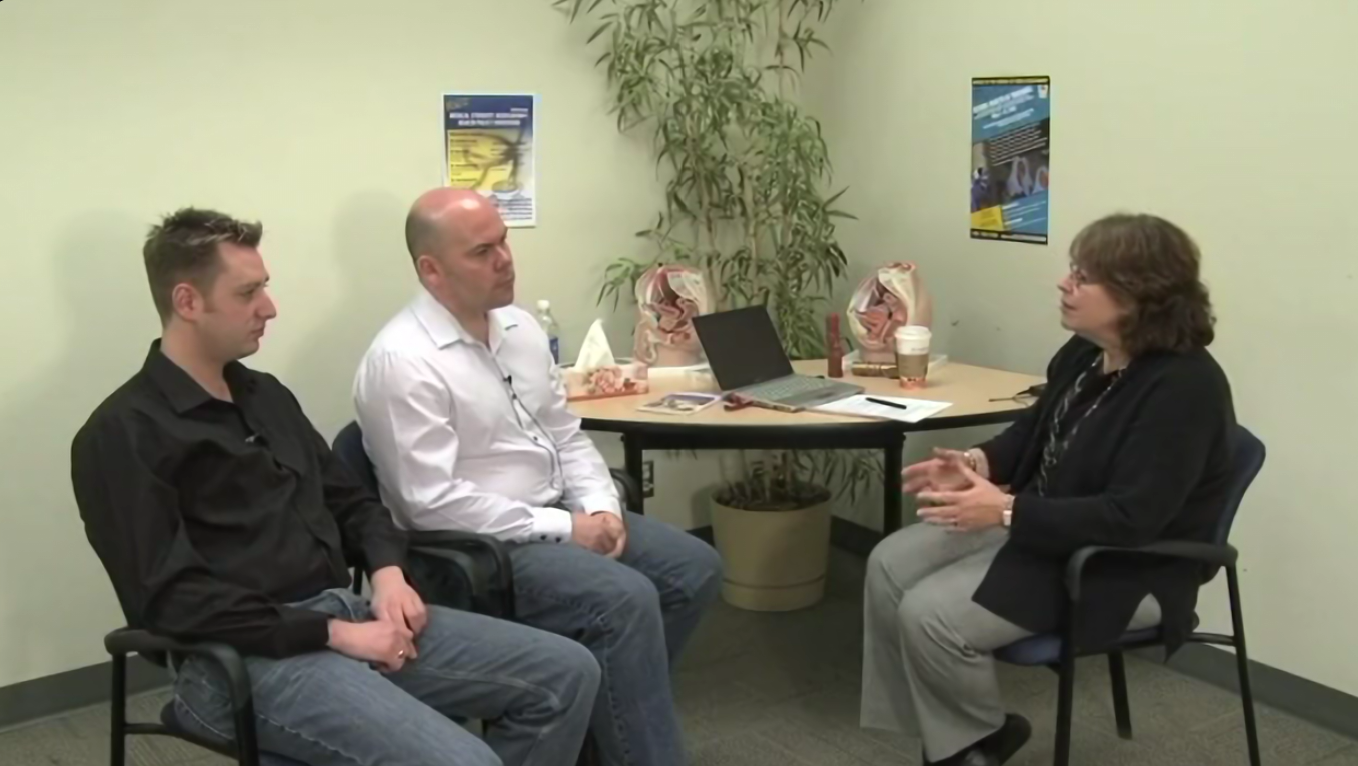
The couple in this lesson have not had sex for a year. Andrew is 45, and he had nerve-sparing surgery a year ago for a small tumour. His prognosis for erectile recovery is good but not assured. He has not had an erection since.
Jeff has been his partner for about eight years, and the two of them no longer sleep in the same room.
Each of them has misread the other. Jeff thinks Andrew no longer finds him attractive. Andrew wants the contact. He holds back because a kiss might lead Jeff to expect sex. Neither of them had said any of this until they were in the room together.
3.3 Introducing and staging sensate focus
Why removing the goal works
Andrew and Jeff have stopped touching each other altogether. The exercise you are about to offer them takes intercourse and orgasm off the table. What does removing the goal do?
Most couples treat sex as having a goal: an erection, and intercourse that ends in orgasm. Sensate focus takes that goal away, which is what makes the exercise possible for a couple like Andrew and Jeff.
When sex has a goal, attention goes to whether the goal is being met. A man checking for an erection is watching himself rather than feeling anything. So, the arousal fades. He then sees no erection and takes it as proof that he was right to worry.
The exercise breaks that loop by taking the erection out. The first step leaves out the breasts and the genitals. Touch is limited to reduce the psychological pressure on the receiver to feel sexually excited.
The receiver's job is to notice sensation and to bring attention back each time it wanders. This works like meditation. Attention is a camera lens that brings the touch into sharp focus and lets everything else fuzz out.
Every move in this lesson protects the couple's attention. That is what you are prescribing.
3.3 Introducing and staging sensate focus
Connect before you prescribe
In the appointment you are about to watch, the clinician does not open with the exercise. She asks the couple what they used to do together when they felt close, and Andrew says cooking. She has them put a day in the diary for it before she raises anything else.
Start where the couple already were, and put a date on it:
What to do
- Ask what they were doing early on, when they felt closest.
- Ask whether they could do that now.
- Set the date before they leave the room.
Try:
SAY
- Early on, what were you doing when you felt closest to each other?
- Is that something you still do?
- When could you do that? Let's put a day on it.
If a couple name something they cannot do any more, go after what it gave them rather than the activity itself:
SAY
- What was it about that you'd want back?
3.3 Introducing and staging sensate focus
Offering sensate focus without pressure
Offer it as something the couple can decline. Ask what they think of it before you ask them to try it:
What to do
- Say it might be too soon.
- Say they can take it away and decide later.
- Describe it, then ask what they think.
- Say you would not push it.
Build the offer you would make to Andrew and Jeff. Add the lines you would use, in the order you would use them.
Watch the clinician connect first, then offer
Andrew and Jeff, a year after surgery
She asks what the two of them used to do together, gets cooking from Andrew, and sets a date for it. Only then does she raise sensate focus.
Andrew, Jeff and the clinician
18:32Um, but it feels to me just talking with you that the first step is that the two of you need to kind
18:38of connect a little bit more. That, you know, even just feeling close to each other seems to be, um, this feels like there's a fair bit of distance
18:45between you, you called it a wall, uh, you talked about, um, Andrew's just avoiding it. Um, so I'm, I guess my thought would be to try
18:56and figure out how you guys could be a little bit closer in your relationship before really talking about how to, uh,
19:03work with your sexual relationship. Um, does that make sense to you? Yeah. Mm-hmm. Okay. Just take the little steps before.
19:13Right. Yeah. And so I'm, I'm guessing that early in your relationship there were times that you, um, would've really felt close to each other.
19:24There were activities that you did in addition to sex where you were probably feeling really connected to each other, or there were times when you
19:32would just create a romantic, um, kind of evening. Um, yeah. Can you, when I ask about that or when I mention that, what kinds of ideas come
19:43to your mind about things you used to enjoy doing or how, what worked for you before? Mm-hmm. Can, can you,
19:49you may have different ideas about that. They don't need to be the same, but what comes to mind for you?
19:53We cook together. Okay. Is that something you're still doing or not? We don't even do anything together anymore. But cooking was a time that you felt Yeah,
20:03we kind of connected and close. We'd Get in the kitchen and knock something up together. Okay. Yeah. We come home from work and heat something up
20:11or whatever and go to our separate rooms, separate part of the houses. That's What's happening now, kind of. Yeah. Yeah. Okay.
20:18And so for you, Jeff, is when Andrew raises the idea about cooking, is that something that you connect with as well?
20:25That is a time that you felt close to him? It's definitely a passion that we both share and it really was almost the foundation
20:32of our relationship when we first really, yeah. First started dating. Okay. So, well, my thought would be to do some things like that.
20:41And I don't know if you felt like that was a, a step that you could take if you felt that
20:46that might be manageable to plan that you, you think you could, that doesn't feel like something that is impossible to do.
20:53No, I could enough to do that Actually. Excellent. Yeah. Excellent. Well, today's Thursday and my good friend and colleague, actually, I guess it's Friday, my good friend
21:02and colleague, uh, John always tells me that it's not a good idea to let a couple go without setting a date for the date.
21:09So I encourage you to just kind of think about over the next week. When could you do that? I think we can definitely try
21:17to plan it for maybe even next weekend. Yeah. Okay. That would be common last actually, Like a Friday or Saturday.
21:25Yeah, just I might be, which one? The old date Nights. I think Saturday would be better. 'cause then part of the experience can be going
21:32and picking up the ingredients together and Mm. Okay. Okay. Yeah, that sounds good. Alright. And there's another piece of this,
21:42and I don't know if it might be too soon. So I'll offer it to you as something that you could do or not do.
21:50Uh, we could talk about when we meet again, if you wanna meet again, we could talk about it then,
21:55but I'll give it to you just in case you might find it useful now. Um, part of what couples tend to lose touch with
22:05when their familiar routine of, uh, penetrative sex is not working, they actually, uh, throw the baby out with the bath water
22:14and stop, uh, cuddling as much and being as affectionate and exploring touch as much as they they used to.
Listen for how much of what she says is permission to say no.
You are watching the extract from 18:32 to 22:21. The full session runs 28 minutes and is available in the resources at the end of this module.
3.3 Introducing and staging sensate focus
How to describe the first exercise so a couple can do it

Describe the whole exercise in the appointment. The clinician does it in about two minutes, and the couple leave able to do it that week.
Cover the time, the room, the two roles and what is left out, in that order:
Each phrasing carries out one of the six steps. Put each one with the step it belongs to.
If a patient asks why they would do it:
SAY
- It takes away the pressure to get an erection. That's what the exercise is for.
3.3 Introducing and staging sensate focus
The feedback rule: three things and one
After each turn the receiver tells the giver three touches they enjoyed and one they would change. Each has to be described closely enough that the giver could repeat it exactly.
Give the couple the rule in one sentence: Tell each other three touches you really liked, and one you'd change. Then show them the difference between feedback a partner can use and feedback they cannot.
Read each pair across: the line to avoid, then the line to use.
Instead of
That was nice.
Say
I really liked it when you ran your palm very lightly down the centre of my back.
A general comment gives the giver nothing to repeat.
Instead of
Seven out of ten.
Say
The long strokes across my shoulders were the best part.
A score says how much, and nothing about which touch.
Instead of
Don't do that.
Say
Slower there would feel better.
If something tickles or feels wrong, a positive request tells the giver what to do instead.
Watch the report
Andrew and Jeff, two weeks later
This is the follow-up to the appointment on the screen before. Two weeks on, Andrew and Jeff have cooked together and done the exercise the same evening. Andrew describes what happened.
Andrew, Jeff and the clinician
1:25and it was, you know, it was one of those things for me anyway, where there, there was some really, you know, quite
1:35amazing things that happened. Um, but then there's, there was that shadow of the, the erectile dysfunction kind of there in the background.
1:43And, um, I, I noticed when Jeff and I were, would, you know, like Jeff was touching me and, and I was touching him and I, um, I actually realized,
1:55I think at one point, like I started off uncomfortable. Yeah. Um, I think Not surprising given what you Gone through. Yeah. Well, I guess,
2:02I mean, part, it, it, it partly had been a long time, but also it, there was a strangeness almost to the, um,
2:08the touch, I suppose it probably because it, it had been such a long time, but I actually found myself getting a bit horny, you know,
2:16like I, I actually felt, um, like I was, I was getting turned on. Um, and so I had that moment of, wow, you know, this
2:25was unusual and, and great. And then of course that went on for a couple of minutes and, uh, and then I checked myself.
2:34Um, and so I kind of just looked and, you know, my, my dick was just hanging there and, um, almost instantly, like the whole
2:47experience turned round for me. And I think, I dunno if you noticed, um, me at that point, but I, I, I mean, I didn't back away and we, we,
2:53and we carried on doing what we were doing. Wow. But the experience of it just changed. It, it stopped being fun. Yes. Um, yes. Yeah.
3:07Yeah. Well, and I, I think that that's, well, a couple things. First of all, um, I think it's amazing
3:13that you didn't back away because that was something that you guys had talked about the first time you were here
3:19that was really problematic is, um, you used the term Jeff, I think, of avoiding and this barrier you talked about.
3:26And so you didn't do that despite things not working as you might hope, um, you stay connected, which is
3:33a major accomplishment in my mind. Not sure if you think of it that way. Mm-hmm. Um, so that's good.
3:39The other thing that sounds really good is that you were able to experience being aroused because again, last time that you were here,
3:46you told me you just weren't experiencing that. Yeah. Um, and so, uh, I think that's also very, very hopeful.
The film stops where the clinician is about to respond, and you will choose what you would say at that moment.
You are watching the extract from 01:25 to 03:07. The full session runs 8 minutes and is available in the resources at the end of this module.
Pause and choose · Andrew and Jeff
The film stopped before the clinician speaks again.
Andrew has told you the exercise went well until he looked down. He has also told you he felt aroused, and at the last appointment he said arousal had stopped altogether. He stayed with the exercise after it stopped being enjoyable.
What do you say first? Choose one. There is a best answer here, and it is what the clinician actually said. The feedback explains what each of the other three would do.
Choose one option.
Here is the feedback for the other options.
Now watch what she says.
3.3 Introducing and staging sensate focus
How to teach arousal cues when the erection is gone
Andrew read arousal from his erections, and without one he could not tell what he was feeling. The other signals were still there, and he had never needed to notice them. Give him another way to read his own arousal:
What to do
- Say that the erection was the cue, and it has gone.
- Ask what else he notices.
- Name the signals other patients report.
Try:
SAY
- For a lot of men the erection is what tells them they're aroused. Without one, that signal is gone.
- What else do you notice when you're getting turned on?
- Some men notice their heart going faster, or a rush, or a tingling through the body.
- Fullness in the pelvis is arousal too, and it isn't tied to an erection.
If a patient says he felt nothing:
SAY
- Anxiety can mask it. Was there anything at all in the first few minutes?
3.3 Introducing and staging sensate focus
Answering 'why bother'
Andrew looked down, found no erection, and concluded that nothing else was worth pursuing. He had not heard that an orgasm without an erection is possible.
Clinician: When you looked down, the thought was, why bother. Is that fair?
Andrew: Pretty much. Without an erection, what's the point?
Clinician: The other version is, I don't have an erection and I can still enjoy this. You can still feel aroused, and you can still feel the pleasure of the touch. An orgasm without an erection is possible. Did you know that?
Andrew: No, I didn't know that.
Clinician: Then it's worth finding out what kind of touch gets you to orgasm without an erection.
The clinician says the thought back before she offers anything. She gives Andrew a sentence to replace it, then tells him what is still available to him. The fact about orgasm comes last, as a question, so Andrew can say whether he already knew it.
3.3 Introducing and staging sensate focus
What changes at steps two and three
Andrew and Jeff are still on the first step, and each step after it adds something.
Step two keeps the same shape and adds the breasts and genitals. The touch there stays brief and light, and it does not go as far as orgasm. The receiver can guide the giver's hand, which matters most for genital touch.
Step three gives more of the time to genital touch, and the receiver can either ask for it to carry on to orgasm or choose to stop. Pleasure rather than orgasm is still the goal.
Once a couple have done a step and it went well, they can move to the next one. Tell them what the next step adds and what it still leaves out. If a partial erection comes, the couple stop touching there, let it fade and come back to it later.
3.3 Introducing and staging sensate focus
What the fourth step is, and how to set up the first attempt
The fourth step is intercourse, and the couple run it as the next exercise rather than as a return to sex as it was. They attempt penetration and stop there. There is no thrusting, and no attempt at orgasm.
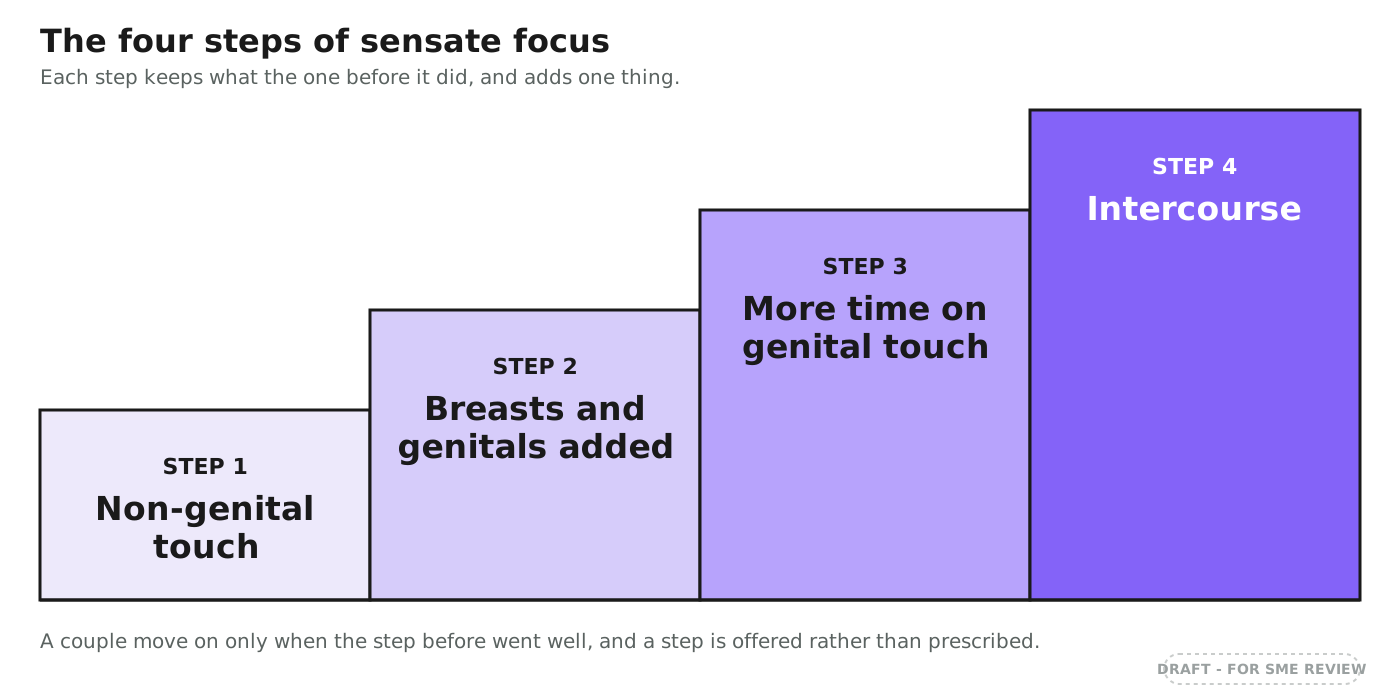
The measure of whether the step worked is whether penetration happened comfortably. That is the only measure, so the couple can stop worrying about orgasm.
The step is offered rather than prescribed, and the couple can decline it and stay where they are.
What is being tested differs by couple. After prostate cancer the question is usually whether an erection holds long enough. Where the partner has vaginal dryness or pain of their own, the step tests their comfort as well. For some couples the act is not vaginal at all. Set it up as an experiment, and say what happens if it does not work:
What to do
- Say why the last step means they are ready.
- Agree with the couple what the step is testing, and leave orgasm and performance out of it.
- Tell them how to make it comfortable.
- Say what they do if penetration does not happen.
Try:
SAY
- You've done the last step twice now and it went well both times. That's what tells me you're ready to try this.
- Getting there comfortably is the whole goal. No thrusting, and don't worry about the orgasm.
- Take it slowly, use plenty of lubricant, and check in with each other on the way in.
- If it doesn't work you go back to the last step and try again another week. Nothing about that counts as a failure.
If a couple would rather not try yet:
SAY
- Then you don't. We can stay exactly where you are for as long as that's useful.
3.3 Introducing and staging sensate focus
Knowledge check
A couple have done the third step twice and both times it went well. They ask what comes next. He still gets no reliable erection.
Tick every option that belongs, then check.
Tick at least one before checking.
3.3 Introducing and staging sensate focus
Think of a couple you have seen who had stopped touching each other.
What did they used to do together when they felt closest?
Write down how you would describe a first exercise to them, in two or three sentences.
3.3 Introducing and staging sensate focus
What you can do now
Which two will you use in your next appointment?
Choose up to two, and a space to write a note opens underneath. All of these are saved to your conversation guide either way.
Marked for your next appointment.
These are saved for you, with the phrasings from this lesson, in the conversation guide on the resources screen at the end of this module.
This is a long module. You have finished three lessons and there are six to go. Now is a good time to take a break. Your progress is saved, so you can pick up here when you come back.
Module 3: Intervention
3.4 Resuming sexual activity
15 minutes
3.4 Resuming sexual activity
Sex after prostate cancer treatment is wider than intercourse
A couple tell you intercourse is no longer possible. How much of what they could do together does that rule out?
Treatment changes erectile function. Most of what a couple can do together sexually does not need an erection.
While treatment affects more than just erectile function, in instances where couples are interested in sex but are limited by erectile function, there are other options for them to be sexually intimate with each other in the absence of erections.
The guidelines treat non-penetrative activity as part of rehabilitation. They name manual stimulation, oral sex and vibrators, and ask you to remind patients and partners that these can lead to connection, pleasure and orgasm1.
For many couples, these activities become a lasting addition to their sexual repertoire, kept on even if erectile function returns. That is why the conversation is worth having early. It gives the couple something that works now, and runs alongside whatever treatment they are trialling or have success with.
Guideline statement 23 asks you to treat grief over sexual loss as a normal reaction, and to encourage couples for whom sexual recovery matters to pursue intimacy despite that loss2.
Doug listed what he would consider three months after his prostatectomy: oral sex, mutual stimulation, using his hands and erotic massage. He ruled out toys and was unsure about a vacuum device.
Doug's six-month appointment ends with two things in the same plan: the touch he had agreed to, and injections.
3.4 Resuming sexual activity
How to name the options in words a patient will use
Non-penetrative activity is the guidelines' phrase, and it leaves the patient guessing which acts you mean.
Outercourse is the word that covers all the non-penetrative activities, such as oral sex, using hands and massage. It is important to teach this word, as it names the whole set of activities without naming penetration. Plain words also show him you are comfortable with the subject, which makes it easier for him to have the conversation:
What to do
- Say the specific act.
- Say what it does not depend on.
- Offer more than one, so the patient chooses.
Try:
SAY
- You could try oral sex, using your hands with each other, or massage. None of those need an erection.
- The word for that is outercourse. It covers everything that isn't penetration.
- Which of those would you two be most comfortable starting with?
If a patient treats these as second best:
SAY
- What would you want to be getting out of it? Let's start there.
Watch the barrier come down
Doug and Jean, three months after surgery
This is the appointment from lesson 3.1 again, a little further on. Doug has agreed to try sexual touch. He has said he feels unclean because of the leakage. The clinician deals with that before the couple leave.
Doug, Jean and the clinician
13:31That's good. That's Good. Mm-hmm. So to the important things to remember is that urine is, is essentially sterile. It's not, there's no harm to you Yeah.
13:38To have contact with urine. Yeah. Um, some of the strategies couples find helpful or to have a washcloth handy
13:45or to lay a towel out on the bed mm-hmm. If there is a little bit of leakage that way it's easy to clean up.
13:50It doesn't interrupt the activity that you're engaging in. Um, and if you're engaging in these strategies, if you're touching each other, caressing each other,
13:58bringing pleasure to each other, then um, you've got that towel handy. Right. If there is some leakage. Okay. Okay. Yeah. So, so is that okay with you?
14:07That's fine, yes. That's, that's fine. I looked after kids. Okay, good. So let's, um, let's assign that for homework then. Okay.
Listen for how short it is: one fact, two practical suggestions, and a question to Jean.
You are watching the extract from 13:32 to 14:10. The full session runs 16 minutes and is available in the resources at the end of this module.
3.4 Resuming sexual activity
What the clinician did about the leakage
Doug would not try the sexual touch he had agreed to while he thought the leaking made him unclean. In the film, the clinician deals with it in under a minute.
She gave one fact.
- Urine is sterile. There's no harm to either of you in contact with it.
Doug's worry was that he was unclean. The fact answers that worry directly.
She gave two practical suggestions.
- Some couples keep a washcloth handy, or lay a towel on the bed. If there's any leakage it's easy to clean up, and it doesn't interrupt what you're doing.
The couple leave with something to do as well as reassurance.
She checked with Jean.
- Is that alright with you?
Jean is the person Doug was worried about. She said it was fine, because she had looked after children, and her answer settled his worry about being unclean.
3.4 Resuming sexual activity
How to respond to a no, now and later
Doug ruled out toys and was unsure about a vacuum device. The clinician recorded both and moved on, and the plan proceeded from what he had said yes to.

A no can also depend on something that changes. Doug said no to oral sex because of the leakage. His no was about the leakage rather than about oral sex. When the leakage settled, the option was worth putting to him again. How you answer now decides whether the option can come back later:
What to do
- Take a no as an answer and record it.
- Ask what the hesitation is about, once.
- Note what the no depended on.
- Raise it again when the barrier goes, as a new option rather than a correction.
Try:
SAY
- You've said toys aren't for you. That's fine, it's off the list. We can revisit this if things change.
- What is it about the vacuum device you're unsure of?
- You weren't having oral sex because of the leakage. That's settled down now.
- That could be back on the table, if you both want it.
If the patient declines a second time:
SAY
- That's fine. What would you rather put the time into?
3.4 Resuming sexual activity
How outercourse and the pro-erectile treatments run together
Doug left his six-month appointment with two things running. The couple carried on with the touch that had worked, and he was booked for a consultation to try an injection.
The clinician set them out as a pair. The injection is there for when he wants to try intercourse, and the touch is there whether the injection works or not. Both belong in the plan, and the couple need to hear why:
What to do
- Keep the touch going while he tries the treatment.
- Name which one is for which purpose.
Try:
SAY
- The injections are there for when you want to try intercourse.
- The touch you've been doing stands on its own, and you can use it any time.
- You'll leave today with both.
3.4 Resuming sexual activity
Knowledge check
Doug returns six months after his prostatectomy. At three months he ruled out oral sex because of the urinary leakage. His continence has settled since and he no longer needs a pad most of the time. The oral medication he tried gave him side effects, and the sexual touch he and Jean agreed on has been working.
Tick every option that belongs, then check.
Tick at least one before checking.
3.4 Resuming sexual activity
What you can do now
Which two will you use in your next appointment?
Choose up to two, and a space to write a note opens underneath. All of these are saved to your conversation guide either way.
Marked for your next appointment.
These are saved for you, with the phrasings from this lesson, in the conversation guide on the resources screen at the end of this module.
Module 3: Intervention
3.5 The partner's own sexual health
15 minutes
3.5 The partner's own sexual health
The partner has a sexual health of their own
A partner comes to the appointment for the patient. They have a body and a history of their own, and what has changed for them shapes what the couple can do together.

Two partners in this module arrive with different things to manage. Jean is in her sixties and has managed menopausal changes with her own physician. Jeff has gone without what he needs while Andrew avoids the subject.
Ask the partner about their own sexual function, in the appointment the patient came for.
3.5 The partner's own sexual health
What Jean brought to Doug's appointment
Jean came to a consultation before Doug's prostate surgery. The clinician asked her about menopause and about her own sexual function, and Jean had changes of her own to report.
She had managed them with her own physician, using vaginal creams and Premarin, along with lubricants she buys over the counter.
The dryness bears on the couple as well as on her. The clinician closes the exchange by saying that pain, friction and dryness make a sexual encounter less rewarding.
Watch the partner being asked
Doug and Jean, before his surgery
This is the appointment before Doug's surgery, the one Module 2 worked from, and the only time in this module you see the couple before treatment. The clinician has been mapping the couple's sexual pattern. She turns to Jean and asks about her own sexual function.
Doug, Jean and the clinician
6:37Okay. Yes. Absolutely. And now you are in your sixties as well. Mm-hmm. Mm-hmm. And so I'm sure menopause has probably
6:43been a factor for you. Mm-hmm. Have you had changes in your sexual function? Some changes, yes. But, uh, I've been able to manage those
6:51with physician helped. Okay. Um, um, vaginal creams or premarin and things like this, so, Oh, good. So you found
7:01some options? Yeah. Or just the cleanse and some of the, uh, you can get over the counter drugs Absolutely.
7:06Or not drugs, but, um, lubricants. Right. Okay. So you've had a bit of vaginal dryness then. Mm-hmm. Mm-hmm. Which, um, perhaps you treated
7:14with Premarin mm-hmm. Maybe hormonal strategy or a vaginal moisturizer. That's right. That's right. Yeah. And then you also bring up lubricants too. Mm-hmm.
7:21So being able to use a lubricant in a sexual mm-hmm. Encounter mm-hmm. Can kind of help facilitate that mm-hmm.
7:26And facilitate pleasure too. Right? That's right. Yeah. If there's too much pain or friction and, and dryness is a factor, then it's not
7:34as rewarding that. Right. 'cause things don't feel quite as good's. Right. Yeah. Okay. Um, and we, the question always is though,
Listen for how she names the treatments Jean is already using.
You are watching the extract from 06:37 to 07:37. The full session runs 18 minutes and is available in the resources at the end of this module.
3.5 The partner's own sexual health
What the guidelines ask you to offer the partner
The question the clinician puts to Jean is the one the guidelines ask of every service. Guideline statement 22 asks for education, individualised sexual rehabilitation and psychosexual support for patients and partners across the whole survivorship continuum1.
It asks for that support to be tailored to the treatment, the partnership, the cultural context, sexual orientation and gender identity. The partner is named in the statement rather than implied by it.
Statement 25 extends the same duty to gay and bisexual men, men who have sex with men, transgender women and gender non-conforming patients, along with their partners2.
Supporting the partner's needs and encouraging mutuality are described as critical to a couple recovering their sexual intimacy. A partner who is struggling affects how the patient recovers.
Ask the partner about themselves rather than about the patient.
3.5 The partner's own sexual health
Asking the partner about their own sexual health
The partner did not book the appointment, so the question must come from you.
Choose one option.
Jean has not been asked about herself, and the appointment is Doug's. How does the clinician open the question?
Clinician: You're in your sixties as well, so menopause has probably been a factor. Have you had any changes in your sexual function?
Jean: Some dryness, yes.
Clinician: So you've had a bit of vaginal dryness. What have you been using for it?
Jean: A cream from my doctor, and something I buy at the chemist.
The clinician names the likely context first, so Jean has something specific to answer. She says Jean's answer back using the specific word, then asks what Jean already does about it.
If a partner says it is not what the appointment is for:
SAY
- It bears on what the two of you can do together, so I'd rather ask.
3.5 The partner's own sexual health
Naming the treatments a partner already uses
Jean answered with vaginal creams, Premarin and something she buys over the counter. The clinician gave each of them its name and supplied the word for the one Jean had described. Each of these does a different job, and a patient needs the right word for each:
What to do
- Name the hormonal option.
- Name the non-hormonal moisturiser.
- Name lubricant separately and say what it is for.
Try:
SAY
- So that's a hormonal strategy, with a vaginal moisturiser alongside it.
- A lubricant is a different thing again. That one's for the intercourse itself.
- Using one can make it more comfortable, and more pleasurable.
Watch the male partner being asked
Andrew and Jeff, a year after surgery
This is earlier in the appointment you watched in lesson 3.3, before the clinician offers sensate focus. Andrew has said the sexual side of the relationship has stopped. The clinician asks how important it is to the two of them to get some physical intimacy back.
Andrew, Jeff and the clinician
14:29you know, at, at a later point in time. So you're now a year out. Mm-hmm. Um, how important is it to the two of you to, uh,
14:39reestablish some, uh, physical relationship, some physical intimacy? Well, I definitely can understand what Andrew's going through. Yeah. And definitely sympathetic to it.
14:51Um, but there still are needs that I have as well that need to get, you know, somewhat satisfied. Mm-hmm. And there's always ways that we can change the way
15:01that we do that. Mm-hmm. And avoidance isn't helping the situation. Mm-hmm. I'd rather try and have things fail Right. Than
15:11to not try at all. What is it that you value the most about your physical intimacy? Feeling Desired. Okay. Um, to have so much love and,
Listen for what Jeff says about his own needs.
You are watching the extract from 14:33 to 15:14. The full session runs 28 minutes and is available in the resources at the end of this module.
3.5 The partner's own sexual health
Asking Jeff about his own needs
In the film, the clinician asks how important it is to the two of them to get some physical intimacy back. Jeff answers for both of them at once.

Clinician: How important is it to the two of you to get some physical intimacy back?
Jeff: I can definitely understand what Andrew's going through, and I'm sympathetic to it.
Choose one option.
Jeff has answered with his sympathy for Andrew, and has said nothing about himself. What do you say next?
Clinician: You've said you understand what he's going through. What about you?
Jeff: But there are still needs that I have that need to get somewhat satisfied. Avoidance isn't helping the situation. I'd rather try and have things fail than not try at all.
Clinician: What are you going without at the moment?
Jeff gives the sympathy first and his own need second, in one answer. If you respond to the sympathy, the conversation stays on Andrew and Jeff's own need goes unanswered. Acknowledge what he said about Andrew, then ask him what he is going without. Write his answer down next to the patient's needs, so the plan covers both of them.
If a couple treat the partner's health as off topic:
SAY
- You're both in this. I'd like to know where each of you is.
3.5 The partner's own sexual health
Knowledge check
You are seeing Doug before his prostatectomy, with Jean in the room. Both are in their sixties. You have mapped the couple's sexual pattern and taken a goal from each of them.
What do you ask her?
Choose one option.
3.5 The partner's own sexual health
What you can do now
Which two will you use in your next appointment?
Choose up to two, and a space to write a note opens underneath. All of these are saved to your conversation guide either way.
Marked for your next appointment.
These are saved for you, with the phrasings from this lesson, in the conversation guide on the resources screen at the end of this module.
Module 3: Intervention
3.6 Discrepancy in desire and conflicting goals
20 minutes
3.6 Discrepancy in desire and conflicting goals
When one partner wants more than the other
Some couples genuinely want different amounts of sex. In others, both want the same thing and only one of them can act on it.

Andrew and Jeff look like the first kind of couple. They are not.
You met Andrew and Jeff in the section about sensate focus. Earlier in that same first appointment, the clinician asked each of them what they valued about physical intimacy.
Jeff said feeling desired. His love and attraction have never changed, and he does not feel them coming back towards him.
Andrew said he misses it too, and that none of the wanting has gone away. It sits behind a wall he cannot break through. The hardest part for him is that Jeff cannot tell he still wants him.
Both men still want sex, and neither of them can tell that about the other. From the outside, a couple in that position looks like a couple who want different amounts.
Ask each partner what they want before you treat this as one of them wanting less.
Watch what each of them is missing
Andrew and Jeff, a year after surgery
This picks up in the same appointment, at the moment the film in lesson 3.5 stopped. The clinician asks each partner what he values about physical intimacy, and then what he is missing.
Andrew, Jeff and the clinician
15:11to not try at all. What is it that you value the most about your physical intimacy? Feeling Desired. Okay. Um, to have so much love and,
15:26and attraction still for Andrew that's never changed. Mm-hmm. Um, so I have so much feelings towards him that I don't feel are coming back towards me still anymore.
15:38Mm-hmm. Mm-hmm. So it's a struggle to have so much desire Mm-hmm. And not feel getting reciprocated. Mm-hmm. Um, how about for you, Andrew?
15:52Um, What's important about this to you? What are you missing? I, I, I mean, I miss the physical intimacy and I,
16:02and I miss the, you know, those, those times that we, we had, and I, and you know, for me, I, it's not that any of that feeling
16:15of desire or, you know, wanting to be intimate has, has ever gone away. Um, it's just that it's kind of hiding behind this,
16:27this wall that I can't break through. Mm-hmm. Um, And I really wish I could because Yeah. You know, I, um, it kills me to think that I, you know,
16:39I can't do what's necessary to, to make you feel like I do want you and I, and I want to have a, you know,
16:48a fulfilling full relationship. Mm-hmm. Um, Well, I think it, I mean, it, it's obviously very important to you and it is to most couples to figure that out
Listen for how close the two answers turn out to be.
You are watching the extract from 15:14 to 16:51. The full session runs 28 minutes and is available in the resources at the end of this module.
3.6 Discrepancy in desire and conflicting goals
A difference in desire, or a difference in what each can act on
Depending on the situation, a couple who report different levels of interest will need different approaches.
Situation 1
A difference in desire. The two of them want different amounts of sex, and that may have been true even before the cancer.
Situation 2
A difference in what each of them can act on. Both of them want sex. Something holds one of them back, such as leakage or the fear of starting something he cannot finish. To his partner, that looks like a loss of interest.
The second situation is easy to miss. As Basson's model showed, desire often arrives after arousal rather than before it1. So a man who reports no spontaneous wanting has not necessarily stopped wanting sex. What he may have lost is the closeness that used to set the cycle going.
Find out whether the difference is in what they want or in what they can act on.
Guideline statement 26 sets the boundary for both2. Refer for specialty psychosexual treatment when education and support are not enough.
3.6 Discrepancy in desire and conflicting goals
How to ask each partner what they value about intimacy
Ask each of them what they value about physical intimacy, and what they are missing. Their two answers are the material you work with:

What to do
- Put the question to each of them, by name.
- Ask what they value, then ask what they are missing.
- Hear both answers before you respond to either.
Try:
ASK
- What is it that you value the most about your physical intimacy?
- How about for you? What's important about this to you?
- What are you missing?
If one of them answers for the couple:
ASK
- That's the two of you. What about for you?
3.6 Discrepancy in desire and conflicting goals
Telling a difference in desire from a difference in what each can act on
Jeff and Andrew both said the wanting was still there. What separated them was that one could act on it and one could not. Jeff had also taken it personally, and the clinician told him that couples who stop having sex commonly do.
Clinician: Jeff, is the wanting still there for you?
Jeff: It's never gone. I just don't feel it coming back.
Clinician: And for you, Andrew?
Andrew: It's all still there. I can't get past it.
Clinician: What gets in the way of doing something about it?
Andrew: I don't think I can follow through.
Clinician: You've both told me the desire hasn't gone. What's between you is what you can do with it. When a couple stop having sex, it's really common for the other one to feel it's about them. You're not the first couple to sit here with that.
Asking each of them in turn shows the desire is there on both sides. Saying back what you heard from both, then naming the rejection reading as common, gives Jeff another way to understand the silence.
Now try three of your own. For each one, which are you looking at?
1. A man two years after surgery says he thinks about sex as often as he ever did. He stops before anything starts, because he does not trust the erection to hold.
A difference in what each can act on. The wanting is intact and something specific is stopping him, which is what you work on.
2. A couple tell you they have always wanted sex at different rates, and that it was a point of tension long before the diagnosis.
A difference in desire, and it predates the cancer. The treatment has not created this one, and guideline statement 26 is where you check whether it is yours to work on3.
3. A man four months into ADT says the thought of sex does not arrive any more. His partner says he used to suggest it most weeks.
A difference in desire, and the treatment caused it. Lesson 3.9 covers what to do, and the point here is that a real desire difference is not always one the couple came in with.
If one of them says the wanting has gone completely:
When did you last notice it? What was different about that time?
If he can name a time and say what was different about it, the desire is responding to circumstances rather than gone, and the circumstances are what you work on.
3.6 Discrepancy in desire and conflicting goals
How much is yours to work on, and when to refer
Naming what is happening between the two of them is itself the intervention. Once they can see it, they do the rest themselves. A couple will sometimes raise something that needs more time than your appointments allow. Work like that belongs with someone who sees couples over several sessions. Notice when you have reached that point and say so, because how you say it decides whether they take the referral:
What to do
- Name what you have heard, to both of them.
- Say which part you can work on with them.
- Describe the help they need, and leave who provides it open.
- Ask whether they would take a referral.
Try:
SAY
- What I'm hearing is that you both want it, and one of you can't get to it.
- The part I can work on with you is what happens between you when you try.
- There are people who do this work with couples across a few sessions.
- Would you want me to look into that for you?
3.6 Discrepancy in desire and conflicting goals
Knowledge check
Andrew and Jeff tell you they are no longer sexually active. Jeff says he still wants sex and feels rejected by Andrew. Andrew says the wanting has not gone anywhere, and that he holds back because he does not believe he can follow through.
What have you got in front of you?
Choose one option.
3.6 Discrepancy in desire and conflicting goals
What you can do now
Which two will you use in your next appointment?
Choose up to two, and a space to write a note opens underneath. All of these are saved to your conversation guide either way.
Marked for your next appointment.
These are saved for you, with the phrasings from this lesson, in the conversation guide on the resources screen at the end of this module.
You have finished six lessons and there are three to go. Now is a good time to take a break. Your progress is saved, so you can pick up here when you come back.
References
- Morck, A.C., McLeod, D.L., & Robinson, J.W. (2011). Sexual function primer. Module prepared for the IPODE project.
- Clinical Guidelines for Sexual Health Care in Prostate Cancer (2022), p. 74.
- Clinical Guidelines for Sexual Health Care in Prostate Cancer (2022), p. 74.
Module 3: Intervention
3.7 Penile rehabilitation
30 minutes
3.7 Penile rehabilitation
Penile rehabilitation
Anthony is about to start radiation, and at that appointment his clinician offers him penile rehabilitation. Guideline Statement 29 states that the clinician should define the intent and goals of penile rehabilitation on an individualised basis with three aims:
- Preservation of penile length
- Maintenance of corporal tissue quality
- Early patient engagement in sexual recovery
Importantly, Guideline Statement 29 says explicitly that penile rehabilitation should not be equated with treatment for the recovery of unassisted erectile function1.
Erections depend on two things working together: nerves intact enough to carry the signal, and circulation good enough to fill the tissue. Surgery bruises the nerves, and they are slow to recover – often taking a year or more.
While the nerves recover, the man gets few or no spontaneous erections, so blood is not moving through the penis as it normally would. Erectile tissue needs the oxygen that blood brings, and without it the tissue stiffens and loses elasticity.
Rehabilitation fills that gap. Bringing blood through the penis regularly keeps the tissue healthy while the nerves catch up – which is why the clinician you are about to watch calls it an exercise program.
Most rehabilitation is done with a PDE5 inhibitor, and that is the only approach tested.
Devices and injections come in the next lesson, as treatments for erectile dysfunction rather than as rehabilitation, which is the distinction statement 29 draws.
Penile rehabilitation can be prescribed as maintenance for the tissue while the nerves recover.
3.7 Penile rehabilitation
What penile rehabilitation can and cannot promise:
Four guideline statements cover the evidence for rehabilitation2. One reports a trial result. The other three say the evidence is not there yet.
One tested finding:
Statement 30. A PDE5 inhibitor in the first 45 days after prostatectomy does not improve unassisted erectile function at 12 months compared with a placebo.
Three where the evidence is not there yet:
Statement 31. There is limited evidence for any of the approaches that do not use a PDE5 inhibitor.
Statement 32. There is not enough evidence to say that rehabilitation prevents loss of penile volume.
Statement 33. There is not enough evidence to say whether it helps after radiation therapy.
As the evidence currently stands, nothing strongly supports penile rehabilitation or rules it out.
Anthony, the patient in this lesson, had radiation, so statement 33 applies to him. His clinician prescribes rehabilitation but makes him aware of the limited evidence. He tells Anthony at the first appointment that it may not restore firm erections, and three weeks later he asks whether Anthony wants to continue.
Offer the treatment and tell the patient what the evidence shows. The patient can then decide whether to keep going.
Watch the treatment being explained
Anthony, at the appointment before radiation starts
Anthony had radiation for prostate cancer. You met Anthony in Module 1, at the appointment where his clinician first asked about his sexual function. You will see him again through this module, starting three weeks into radiation and then six months on. He stays sceptical about the medication at each appointment, and each time the clinician answers him differently.
The clinician explains what penile rehabilitation is, how it works, and what he wants Anthony to do: a PDE5 inhibitor at the full dose, with self-stimulation one to three times a week. Self-stimulation here means masturbation, and it is the word he uses with Anthony.
Anthony and the clinician
8:45so you'll have to let, tell me more about that, but, Alright. Alright. So it's probably, uh, the way we could think about it's kind of exercising, um,
8:56your erections or your penis during, um, recovery. Alright. So the, the theory is that we want to try to get more blood flow to the penis,
9:06uh, for a couple reasons. It helps to bring nutrients to the penile tissue, but also oxygenates that region. And there's some theories that suggest that, um,
9:15getting more blood flow, even during radiation can, because of the oxygenation, will actually help with the radiation in terms
9:21of its impact on the prostate cancer. But also over the long term, maintaining, um, oxygenation to the penile tissue can be healthy.
9:30And so that's why we kind of think of it as a rehab program or, or, or an exercise program over time.
9:36And in your case it would be, we would be looking at, um, trying to encourage you to maintain some sexual activity,
9:43um, over the course of this treatment even to a year or further out. So, uh, a suggestion being to engage in, um,
9:52self-stimulation during radiation. Uh, the reason why is that self-stimulation, um, may bring greater blood flow to the penis during that time,
10:01as I mentioned, might help with the radiation, But then wouldn't need medicine to do that. You, we, we actually recommend that you do use medication.
10:09They're a medication called PDE5 inhibitors. You might recognize 'em more as Viagra, Cialis, uh, Stendra. Um, and so these, these
10:20me these medications help to encourage greater blood flow and neural activity down there. Now, early on they're not very effective, for instance,
10:30in terms of getting, um, your penis, uh, firm enough for, for penetration. But it may help, um, with the blood flow.
10:38So the idea is that we encourage you to engage in, in cell stimulation, um, 1, 2, 3 times a week,
10:47um, with the full dose of that medication and choosing on what you're most comfortable with. And that just may mean that we get more blood flow down
10:54there over the course of your recovery. So would that medication affect other parts of me? Uh, yes. Uh, the medication itself is a vasodilator
Listen for the moment he tells Anthony what penile rehabilitation won't do.
You are watching the extract from 08:51 to 10:57. The full session runs 15 minutes and is available in the resources at the end of this module.
3.7 Penile rehabilitation
What rehabilitation is for, in words a patient understands
Rehabilitation asks a patient to keep to a routine for months, probably without noticing any change. Anthony's clinician prescribes a tablet with self-stimulation one to three times a week. A patient who hears the word rehabilitation will assume the routine is meant to bring his erections back, and he will judge it by whether they do. That is the assumption to correct, or he may stop when nothing changes. Tell him what it is aiming to achieve:
What to do
- Name the goal in plain words.
- Say what it does not promise, at the same appointment.
- Give the tablet and the self-stimulation as one instruction, with the dose and how often.
Try:
SAY
- This is about keeping the tissue healthy while you recover. It works like an exercise program.
- Early on this is about keeping blood moving through the tissue. You may get more firmness later, or you may not.
- Take the full dose of the tablet, then self-stimulation, one to three times a week. The tablet opens the blood vessels and the stimulation brings the blood in.
3.7 Penile rehabilitation
Answering a question about dependency
Anthony asks whether taking the tablets will make his own erections depend on them.
What do you say first? Choose one.
Choose one option.
Answer what you know and say plainly that the rest depends on how much the treatment affected his nerves.
Once you have answered the question, say which way the evidence points.
You have something to offer a patient who would rather not take a tablet at all. A vacuum device draws blood into the penis without medication, so it serves the same purpose, and for rehabilitation it is used without the constriction ring. Lesson 3.8 teaches how to use one. Offer it here.
SAY
- It's likely the reverse. More blood flow early tends to protect natural function later.
SAY
- If you'd rather not take anything, a vacuum device does the same job. We can go through it.
If a patient objects to how the tablets make him feel:
SAY
- You might get some flushing, a blocked nose, or some blurring of your vision. Those usually settle down. Tell me if they do not.
Watch the treatment being questioned
Anthony, three weeks into radiation
Anthony left that first appointment with the prescription and an honest answer about what it would do. Three weeks on he is doing what the clinician asked, and he calls it the stupid medication. The clinician does not defend it.
Anthony and the clinician
0:46just outta sorts a little bit. Okay. Alright. Uh, just reflecting back on the last time we met, do you have any thoughts about, uh, our last, uh, talk and,
0:59and did uh, you experience anything different than we expected? Or, how has it been? Uh, to tell you the truth, I barely remember
1:08what we talked about, but, um, I know we, you told me that I should be masturbating and I'm trying to do that.
1:17Okay. I mean, I am doing it. Alright. Alright. And yeah, I'm taking a stupid medication. Okay. That stupid medication. Yeah, right.
1:26I remember you, you weren't all that enthralled with using it in the No, in the first place. Okay. No.
1:31Alright, so, um, I, I want ask you about that and how you're doing in terms of that, uh, that functioning,
1:37but, um, just to be clear in terms of what we talked about before is just in many ways we wanna kind
1:44of clear up any kind of, uh, misunderstandings about the medication and the like, but um, even though, um, we've encouraged you use the medication,
1:53if you're finding it, you know, suitably frustrating or the side effect profile, something you're not interested in, um, that there,
2:02the literature suggests that it may be not, may be helpful, but it isn't solid. And so if you feel that you want to delay continuing
2:11or stop altogether, they use the medication, that's something we can consider. Okay. Well, is there anything that I could be noticing
2:19that would tell me if it's really necessary or not? Like I, I'm able to get erections. Alright. Okay. So, well that actually brings us to the point of,
Listen for what the clinician offers him.
You are watching the extract from 00:49 to 02:25. The full session runs 15 minutes and is available in the resources at the end of this module.
3.7 Penile rehabilitation
A patient can do it and resent it at the same time
Listen to the words a patient uses about the treatment. They will tell you what he thinks of it, even when he is doing everything you asked.
Anthony's clinician answers the resentment rather than the adherence. He says the evidence is not solid, offers to delay or stop the treatment, and lets Anthony decide. He chooses to continue the treatment.
Treat the complaint as information about the plan, and answer it.
3.7 Penile rehabilitation
What you can honestly say about timelines
Behind the resentment is usually a question about how long this goes on for. You can only give a patient a wide range.
Most men are starting to recover some erectile function by a year to 18 months after surgery. For a smaller number, recovery continues for longer. Nerve recovery is slow and takes longer than people expect.
After radiation the pattern differs. Function can decline further over the months following treatment, because radiation continues to have an effect after the course has finished. Anthony's clinician tells him this at three weeks, so that he knows to expect it at six months.
Patients often ask for a number: what are my chances of getting back to how I was. Saying that you cannot give one is a legitimate answer.
3.7 Penile rehabilitation
Why a tablet does nothing without arousal
Patients misread the tablet itself as well. A PDE5 inhibitor increases the blood flow that arousal produces. If there is no arousal, the tablet has nothing to work on. A man who swallows a tablet and then waits for something to happen has not given it the conditions it needs.

If the erection starts weak and firms up as sexual activity continues, the drug is working.
So, when a patient tells you the tablet did not work, find out what he was doing when he took it.
3.7 Penile rehabilitation
Two ways to score an erection
To tell whether a treatment is doing anything, you and the patient need a measure you both understand. Guideline statement 20 asks you to use a validated patient reported outcome measure whenever you can.
For erectile function the guidelines name four:
- the International Index of Erectile Function (IIEF)
- the Sexual Health Inventory for Men (SHIM), the short form of the IIEF
- the Expanded Prostate Cancer Index Composite (EPIC)
- the Patient-Reported Outcomes Measurement Information System (PROMIS)3
The Erection Hardness Score (EHS) is a fifth, validated on its own4. The four named here are questionnaires built for assessment and for tracking change over time. The EHS is a single question, so you can ask it in the appointment itself when a patient reports back on a treatment.
A patient picks one of five grades, and it takes a few seconds. Here are the grades:
| Grade | What the patient reports |
|---|---|
| 0 | The penis does not enlarge. |
| 1 | The penis is larger but not hard. |
| 2 | The penis is hard but not hard enough for penetration. |
| 3 | The penis is hard enough for penetration but not completely hard. |
| 4 | The penis is completely hard and fully rigid. |
Grade three is where penetration becomes possible. When a patient reports on a treatment, ask whether he reaches it.
Try one. A patient two months into rehabilitation tells you this:
It comes up and it's bigger than it was, but there's no way it's enough for sex.
Which grade is he describing?
Grade 2. He says it is hard and that it is not enough for penetration. Grade 1 would be larger but not hard at all, and grade 3 would be enough for penetration but not completely hard. What you are listening for is whether he reaches grade 3.
The clinicians on film use a plain one to ten scale instead, because they are asking the same question in the patient's words. Either works, and the course shows both.
The EHS spells out each grade. On a one to ten scale you say what one and ten mean yourself.
One caution. The guidelines note that many of these measures were not developed on gay men and assume the patient is the insertive partner, so a score carries less information for some couples5.
Whichever scale you use, use the same one next time, or the two numbers cannot be compared.
Watch a medication being tested rather than changed
Anthony, six months on
You last saw Anthony three weeks into radiation. Six months on, he is still not sure the tablets are doing anything. The clinician does not change the dose. He reaches for a scale of the kind you have just read about and gives Anthony something to do with it.
Anthony and the clinician
3:45general sense of myself. Yeah. And so I'm not sure it's, it's working. Right, Okay. But not like it was, I guess. Yeah.
3:56And I don't know if that's the drug or this treatment or just life, I don't know. Right. Well one of the ways we might, might work through
4:05that is kind of problem solve about it a little bit. Right. Or kind of what we do call the functional analysis.
4:09Right. So mm-hmm. Because this, there's a, a couple ways we could think about it is that in terms of natural functioning, you know,
4:19if you're natural functioning, although may be working sometimes and not working other times, right. And that if there's no difference in terms of your,
4:27that functioning and the use of the PDE5 medication, then you could, we could certainly consider just dropping the medication.
4:35'cause it's obviously you're functioning Well. Is there any reason, I was wondering if you could do like a trial, like what if I stopped taking it
4:42for a few weeks or something? Absolutely. And there's no harm done. This is not a drug or a medication that you need
4:47to titrate off of or onto. Right. So you could try over a two week period and see if there's any,
4:53I think I'd like to try and see what happens. Okay. And, you know, um, I recommend it because we think, we'll, we will remember, but we don't.
5:02But, um, one of the things to do is just create a log, you know, uh, just keep it at your bedside table, um,
5:09and just try to, um, take a look at what your functioning is like with and, and, and without Medication. Okay. Just
5:16to see whether it's beneficial, um, when you're, if you're using the medication. Right, Right. Which I have been. Okay. And do you find that it's a,
5:28you have a constant response to it? It gives you a, a, a say an eight outta 10 erection, or a nine outta 10 erection?
5:35Or does it, does it Vary? Well, it's fairly consistent. Okay. I don't think my erections are as robust as they used to be.
5:44Right. Okay. But they're there, they serve their purpose. Right. Alright. Yeah. And so there is some decline. Um, right. So one
5:58of the ways you could think about charting it as well is, you know, just using a simple scale out of 10
6:02where we would say one is flacid as if you're walking down the street, 10 is firm like your erections prior to treatment.
6:10Right. And usually six or seven is what you would consider an erection firm enough for penetration. Yeah. Right? Mm-hmm.
6:17Um, and that's one of the ways in which you could chart it. Right. Okay. Okay. And, um, Although it does seem to, you know, vary within a
Listen for what he asks Anthony to do over the next two weeks, and for the scale he gives him, which is his own rather than one of the published measures.
You are watching the extract from 03:54 to 06:19. The full session runs 19 minutes and is available in the resources at the end of this module.
3.7 Penile rehabilitation
Testing whether the medication is doing anything
Anthony says the tablets may not be working. The clinician does not change the dose. He takes Anthony off the tablets for a fixed period and gives him a ten-point scale in his own words, so that what Anthony reports back can be compared. Find out what not working means to a patient, and measure it, before you change the dose or the drug:
What to do
- Take him off it for a fixed period and say how long.
- Give him a scale, the EHS or your own, and say what the numbers mean.
- Ask him to write it down at the time.
Try:
SAY
- Come off it for two weeks. There's nothing to taper, you just stop and start again.
- One is completely soft, the way you are walking down the street. Ten is what you had before treatment. Six or seven is firm enough for penetration.
- Keep a pad by the bed and write the number down. Two weeks off, then two weeks back on.
If a patient reports a number without a comparison:
SAY
- Was that with or without? That's the bit I need.
3.7 Penile rehabilitation
Knowledge check
A man is four months out from a prostatectomy. He was prescribed a PDE5 inhibitor for penile rehabilitation and has been taking it. He tells you it does not work, and that he has tried it three or four times by taking a tablet and waiting to see what happened.
What do you do first?
Choose one option.
3.7 Penile rehabilitation
What you can do now
Which two will you use in your next appointment?
Choose up to two, and a space to write a note opens underneath. All of these are saved to your conversation guide either way.
Marked for your next appointment.
These are saved for you, with the phrasings from this lesson, in the conversation guide on the resources screen at the end of this module.
References
- Clinical Guidelines for Sexual Health Care in Prostate Cancer (2022), p. 12.
- Clinical Guidelines for Sexual Health Care in Prostate Cancer (2022), p. 12.
- Clinical Guidelines for Sexual Health Care in Prostate Cancer (2022), p. 63.
- Mulhall, J.P., Goldstein, I., Bushmakin, A.G., Cappelleri, J.C., & Hvidsten, K. (2007). Validation of the erection hardness score. The Journal of Sexual Medicine, 4(6), 1626-1634. https://doi.org/10.1111/j.1743-6109.2007.00600.x
- Clinical Guidelines for Sexual Health Care in Prostate Cancer (2022), p. 63.
Module 3: Intervention
3.8 Prescribing a treatment, and what to say when it does not work
45 minutes
3.8 Prescribing a treatment, and what to say when it does not work
What the guidelines ask you to put in front of a patient
You have met Andrew before, with his partner Jeff, in the sensate focus lesson, and again when each of them was asked what he was missing. Both men still wanted sex, and Andrew was the one who could not act on it. He is now a year on from nerve-sparing surgery, which is around the point where men start to see what function is coming back. At this appointment his clinician puts the treatment options in front of him.
Three guideline statements tell you what to cover in an appointment like it1:

- Statement 34: Support pro-erectile aids and non-penetrative sexual activity for any patient who wants to keep having sex. Of all the guideline statements on erectile treatment, this is the one rated as a strong recommendation.
- Statement 35: Discuss every treatment option – oral medication, intraurethral suppositories, injections, vacuum erection devices, penile traction therapy and penile implants. Give the benefits, the risks and the contraindications for each. Tailor what you offer to what the patient prefers, what works for him, and how far into recovery he is. Ask what he wants from treatment and ask his partner the same.
- Statement 36: For erectile dysfunction that persists, tell the patient what a penile implant offers and what it risks.
This lesson teaches three of the options in statement 35: oral medication, injections and the vacuum device. The other three are listed below. This course does not teach them:
Open each one to see what it is and what it does.
a small pellet of alprostadil placed inside the urethra with an applicator. It works on the same pathway as an injection, without the needle, and is less reliable.
a device worn to stretch the penis, used for length and curvature rather than for producing an erection.
a prosthesis placed surgically, considered when other treatments have not worked. A talk on implants is in the module resources.
Offer the aids and the non-penetrative activity in the same conversation.
Watch the options being offered
Andrew, a year after nerve-sparing surgery
Andrew tried a tablet soon after surgery and stopped because of the side effects, so his clinician opens by saying that a drug which did nothing then may work now. She then goes through the options he has not seen: injections, and a vacuum erection device she has brought with her and lets him handle.
Andrew and the clinician
2:50Yeah. Um, so that's one option. There's a few other options. I know you knew about medication, but there are a few other options that, um,
2:58might be possibilities. Um, we do have a sexual dysfunction clinic where they actually teach you to do this. So, you know, perhaps that the way that Viagra
3:10and Cialis, drugs like that, work is by enhancing the effect of the neurotransmitters that allow blood to flow into your, your penis.
3:18So they enhance that effect. Um, but there's another way too that you can introduce those, uh, that neurotransmitter into your penis directly without
3:27having to take a pill. And in fact, because you're not taking it as a pill, you won't get that generalized, uh, effect in your body.
3:34It just affects your penis uhhuh. And so these are generally called trimix injections. They, um, they use a very, very fine needle,
3:45um, that most men find doesn't hurt very much. It's somewhat like a dental needle being very fine. That may not be a great analogy
3:52depending on your experience with dentist. Yeah, sure. But it's a very fine needle uhhuh. And so, um, it's just you, you just inject into the side
3:59of your, um, penis and generally speaking you with enough dosage, and that needs to be titrated a bit. Um, you can get an erection that will last for 30
4:09or 45 minutes to an hour or something like that. Um, so that, that's an option. Mm-hmm. Um, the injections.
4:17Um, the other option are these, uh, vacuum erection devices and, uh, men just fit them over their pe their penis.
4:25They're lubricate so there's a good seal against their skin. Yeah, absolutely. Just put it on your hand and just try pumping the handle.
4:32If you can do that at the same time, and you'll see how it works. And so what this does is it actually, um,
4:39and you put a penis ring around here. Okay. Yeah. And what it does is it actually pulls, uh, blood into your penis.
4:46Yeah. I can feel it. Yeah. And then when there's enough blood in there, your penis will get big and rigid
4:53and, uh, you would slip the penis ring off onto the base of your penis and then, uh, release that and take it off.
5:01And so, okay. This is another option. Yeah. The only thing that people find challenging a little bit about that is that
Listen for what she says each option cannot do.
You are watching the extract from 02:51 to 05:05. The full session runs 16 minutes and is available in the resources at the end of this module.
3.8 Prescribing a treatment, and what to say when it does not work
Limitations of each option
Each of these options can work but they also have limitations:
Open each one to see where it falls short.
draws blood into the penis and holds it there with a constriction ring. Tissue that extends back into the pelvis stays soft, so the erection pivots at the base and is less stable for penetration. The blood held in is venous, so the penis feels cool and can look bluish. The ring belongs to sex rather than to rehabilitation. For rehabilitation the device is used without it, because holding venous blood in works against the oxygen the tissue needs.
The most reliable of the three, and they work when nerve signalling does not. The dose has to be titrated, usually starting in clinic. An early dose may produce a partial erection or none at all, which is a dosing question rather than a failure. Penile pain is common and prolonged erection is a small but real risk that the man would need to be ready to deal with.
a tablet amplifies an erection rather than creating one. It increases the blood flow that arousal produces, so there has to be some response for it to build on. Men with some erectile function left usually notice a difference with a tablet. Men who do not have erectile function may not notice an improvement.
A man's erectile function changes as he recovers. A tablet that didn't work at six months may work at a year, so it is worth trying again.
Name the limitation of an option at the appointment where you offer it.
3.8 Prescribing a treatment, and what to say when it does not work
How to offer an option with its drawback
A patient who hears the drawback from you, rather than finding it out at home, is more likely to trust the next option you offer him. Say it while you are still explaining the option:
What to do
- Describe what the option does, in the order he will experience it.
- Tell him the drawback while you are still explaining the option.
- Say what would make you suggest it anyway.
Try:
SAY
- You put the cylinder over the penis and pump the air out, which draws blood in. Then you slide the ring down onto the base and take the cylinder off.
- It'll feel cold and it can look a bit blue. The ring only holds the blood in front of it, so the base stays soft and the penis moves more than you'd expect.
- A lot of men accept that because it means no tablets and no injections. You'd know within a couple of tries whether it suits you.
If a patient asks which one you would choose:
SAY
- It depends on what you want it for. Tell me what you're hoping to get back and we can discuss a suitable option.
3.8 Prescribing a treatment, and what to say when it does not work
Why men stop using a treatment that works
Injections have a high drop-out rate, even among men for whom they work. The reason is usually timing. The injection has to be given once arousal is underway but before penetration – so it means stopping just when a couple least wants to stop.

The couple are already kissing. He stops, goes to the fridge, finds the prescription, finds the needle, injects, and comes back. By then the moment has passed.
Before treatment one thing led to the next without either of them thinking about it. Now there is a step in the middle, and the couple must plan for it. Working out how to do it for the first time in bed, with the moment slipping away, is the hardest way to learn it.
Ask the patient to talk through what will happen, step by step, before he tries it at home.
3.8 Prescribing a treatment, and what to say when it does not work
Making the treatment part of sex
Doug, who you met in lesson 3.2, is a year on from surgery and using injections. They work. He calls them a nuisance and an inconvenience, and says they might be worth it even so. His clinician takes that further. The treatment does not have to be the interruption, and it can be what starts the encounter instead.
Make the tablet or the device part of what the couple are doing rather than a break in it:
What to do
- Put the treatment within reach before anything starts.
- Keep touching each other while he uses it.
- Use the treatment itself to tell his partner what he is hoping for.
Try:
SAY
- Get it out of the fridge and put it by the bed before you start. Then it's just there.
- You both don't have to stop. Whatever you were doing, keep doing it while he takes the medicine.
- Leaving a tablet on the bedside table in the morning tells your partner what you're hoping for tonight.
If a couple say it will never feel natural:
SAY
- You're right, it's different from how it was. It can still be something you look forward to.
Watch a treatment fail
Anthony, one year on
Everything so far in this lesson has been a couple working a treatment out together. Anthony is on his own. He is a year on from radiation, and since treatment he has started seeing someone new. He and Samantha have been together six months, and the appointment where he prepared to tell her about the cancer comes later in this lesson. Two weeks before this appointment he took his medication and the erection did not come.
Anthony and the clinician
3:02Um, and as we are in the sexual rehabilitation clinic, I'm gonna ask you how are things going in terms of, um,
3:09sexual activity? Uh, I don't know. I guess, uh, you probably wanna know about this. Uh, a couple weeks ago
3:25I couldn't get an erection when we were kind of moving towards that mm-hmm. Um, towards having intercourse and I couldn't get an erection.
3:34Right. I had taken that medication, it still didn't, didn't seem to work Okay. On that occasion. Okay. Is that,
3:47Is this with Samantha? Yep. Okay. We're still seeing each other. I remember, uh, last time we were gonna do a little bit
3:53of a log book Right. To see how your functioning was with or without. Did you determine whether it was beneficial
4:01or not to use the, the, The medication? You know what, I haven't actually done that. I'm sorry, but Okay. I just,
4:09I, No, I don't know. I just, I'm not good at keeping records. Just call Revenue Canada. Yeah. Yeah. Okay.
4:17I, I only ask is, um, in this, in the situation where you were with Samantha a couple weeks ago right?
4:24Were you, you were then you, you were using a PDE5? Yes, I, I'm still using it. Okay. And, um, and tell me about that evening.
4:33What, what happened exactly? Well, um, we were making out on the couch and, you know, petting and kissing and undressing
4:50and I think, uh, when normally I might've initiated inco intercourse, I didn't have an erection, so just kind of aborted
5:00and I think we watched a movie or something. Okay. Alright. How'd that make you feel? Well, I don't know.
5:13I guess, uh, it's not very, it's not reassuring. Um, hope it doesn't happen all the time. And I guess I don't know
5:33how she really felt about it either because we kind of didn't really talk about it. Okay. So that's what I was gonna ask you.
5:40Were you, have you talked about it, did you talk about it then or since with Samantha at all, or?
5:47Well, I, she now knows that I've had cancer, prostate cancer and Okay, good for you. I told her I was taking that medication and, uh,
6:00you know, I, I hope she doesn't think, I don't find her attractive. Okay. That's one thing I was worried about, that
6:07she would think that's what was going on. Right. So, uh, that's a very good point. Right. So having had an opportunity to talk much about it. Right.
6:19I guess I, I don't know. I just haven't made the opportunity. I guess I, okay. I guess I could, we could talk more about it.
6:25Okay. And so what do you think's going on for her? Do you, you Well, I suspect she wonders whether I'm not as attracted
6:37as she might've thought or whether I don't have as much, uh, brutality as she might've thought. Right. Okay. And how about for you?
The film stops before the clinician speaks again.
You are watching the extract from 03:02 to 05:38. The full session runs 17 minutes and is available in the resources at the end of this module.
Pause and choose · Anthony
He has told you two things. The erection did not come, and he does not know what Samantha made of it, because neither of them raised it.
What do you say first? Choose one. There is a best answer here, and it is what the clinician actually said. The feedback explains what each of the other three would do.
Choose one option.
Here is the feedback for the other options.
Now watch what he says.
3.8 Prescribing a treatment, and what to say when it does not work
How to tell a partner that wanting them and getting an erection are different
Some couples will only have sex if there is an erection, so when a treatment fails, sex stops. A couple who also enjoy things that do not need an erection carry on, as Doug and Jean did. Statement 34 asks you to support both at once, the aid and the activity2.

A partner who watches an erection fail will usually conclude that he has lost interest in them. He has to say out loud that he still wants them, because the failed erection looks like proof that he does not. The patient is the only one who can correct that:
What to do
- Say out loud what the partner is likely to be thinking.
- Tell them both that wanting a partner and getting an erection are now separate things.
- Offer to have the conversation with both in the room.
Try:
SAY
- Your partner has no way of knowing that wanting them and getting an erection aren't the same thing now.
- Tell them plainly. It doesn't have to be a long conversation, it has to be an explicit one.
- Would you want to bring them in? Some of this is easier to say once, with me here.
If a patient says his body is saying something else:
SAY
- It's saying something about blood flow. Your partner is reading it as something about them.
Watch a disclosure being rehearsed
Anthony at six months
This appointment comes earlier than the one you watched a few screens ago. Anthony is six months on from radiation rather than a year, and he and Samantha have just started seeing each other. He has not told her about the cancer, or about the erectile difficulty. His clinician does not argue with him. He asks Anthony to imagine Samantha telling him that she has breast cancer, and to say how he would react.
Anthony and the clinician
12:14Right? So how do I go about Right. Talking to my new partner about my situation, Right? And one of the, the things that we feel, um,
12:25can be a stepping stone is to actually talk about, about the cancer, right. About being diagnosed and treated, uh, for prostate cancer
12:34and to see how they respond to that. Right? Right. So like, I'm going out to dinner and then after hor d'oeuvres I just say, you know, I have cancer.
12:45Well, actually not too far from that necessarily. Right. It depends what, what happens is it's nice now, 'cause you
12:52and Samantha have been together for a period of time, which means that you've developed, uh, to some degree, some,
12:59uh, some trust in your, in, in the relationship between the two of you. Right. And with that, we can use it as a foundation
13:06by which discussing that. So for instance, let me say if, if I was Samantha and I said to you, um, at dinner tomorrow night,
13:15um, that, uh, you know, you were, that, uh, I had been at the doctor's appointment earlier in the day
13:22and that I had been diagnosed with breast cancer and treated for breast cancer. Right. How would you feel about that?
13:31I would kind of be shocked, I guess. Okay. Any other reaction? I'd be concerned. Mm-hmm. Okay. So you'd feel, um,
13:46would you feel that that, that she, uh, upset you in any way or, do you feel that you would like to be
13:53Well, it would be upsetting, I guess. Mm-hmm. I, I guess I'd want to know more about it. Yeah. Yeah. All right.
14:01And do you see her as being, I don't know, damaged goods now or would you understand or experience Imagining that this had happened?
14:11Mm-hmm. I don't think it would have much impact on seeing her as damaged goods, but I think it would be something scary
14:22and that she would be scared about. Right. Exactly. And would you think, you know, would you be think that maybe supporting her, for instance, I could help
14:33and asking some questions about it just so that she could have a chance to talk about it? Well, if she would wanna talk about it, like
14:40reversing roles, I would say, I don't know if I'm wanting to talk about it, so I don't know if she does either,
14:44but I guess I would ask her if she'd like to talk about it. Right. Yeah. And I think it's, that's the sensitivity, right.
Listen to what changes once he is on the other side of it.
You are watching the extract from 12:22 to 14:52. The full session runs 19 minutes and is available in the resources at the end of this module.
3.8 Prescribing a treatment, and what to say when it does not work
Why raising it early is better than waiting
Anthony did not tell Samantha about his cancer. Six months later the erection failed, in the appointment you watched earlier in this lesson. She still knew nothing about the cancer or the treatment, and neither of them spoke about it for two weeks.
He had good reasons for saying nothing. The relationship was going well, and he did not want to start it by talking about cancer.
In the appointment you have just watched, his clinician gives him two reasons to tell her. His erectile function is likely to get worse, and the worse it gets the harder it is to keep from her. A conversation he chooses goes better than one that starts because something has gone wrong.
He also tells Anthony how to start. Talk about the cancer first, which is easier, and let that open the conversation about sex.
What the clinician is really giving him is a choice about timing. He tells her now, in a conversation he has planned, or he tells her later, after an erection has failed and she is waiting for an explanation.
Tell the patient to raise it while he still chooses the moment.
3.8 Prescribing a treatment, and what to say when it does not work
Knowledge check
A man eighteen months after prostatectomy has been using injections for four months. They work most of the time. He tells you that last month one did not work, and that he and his partner have not been sexually intimate since.
Tick every option that belongs, then check.
Tick at least one before checking.
3.8 Prescribing a treatment, and what to say when it does not work
Think of a patient whose treatment did not work the first time he tried it.
What, if anything, did he and his partner say to each other afterwards?
Write down one line you would use to ask about it.
3.8 Prescribing a treatment, and what to say when it does not work
What you can do now
Which two will you use in your next appointment?
Choose up to two, and a space to write a note opens underneath. All of these are saved to your conversation guide either way.
Marked for your next appointment.
These are saved for you, with the phrasings from this lesson, in the conversation guide on the resources screen at the end of this module.
Module 3: Intervention
3.9 Androgen deprivation therapy
30 minutes
3.9 Androgen deprivation therapy
What ADT does to desire
Every lesson so far has assumed the patient still wants sex and something else is stopping him. You have already learned to tell the difference between a couple who want different amounts of sex and a couple who both want it while one of them cannot act on it.

Androgen deprivation therapy is the treatment that takes the desire itself. Of all prostate cancer treatments, ADT is the one consistently associated with the largest loss of sexual desire.
So this lesson is not about a man who wants sex and cannot reach it. It is about a man for whom the wanting itself has gone quiet, and about what is still worth offering him.
Everything this module has taught still applies but be cautious what you promise the patient.
3.9 Androgen deprivation therapy
What ADT is, and why it is given
Androgen deprivation therapy lowers testosterone, because prostate cancer uses testosterone to grow. It is usually given by injection, sometimes with tablets alongside it. A man may be on it for months or for years, with radiotherapy, for cancer that has spread, or when the cancer returns after other treatment.
Every sexual effect in this lesson follows from the low testosterone rather than from surgery or radiation damage. That is why the effects last as long as the treatment does, and for a while after it stops.
There is a fuller account of the treatment in the module resources, in a recorded webinar from Prostate Cancer Foundation Canada. It runs 37 minutes and it is optional.
Know what the treatment is doing before you tell a patient what it will do to him.
3.9 Androgen deprivation therapy
What the guidelines ask you to cover before ADT starts
Two guideline statements tell you what to cover before the first injection, and both are rated strong recommendations1.
- Statement 13. Counsel the patient and the partner about the effects of ADT on six things: sexual desire, erectile function, penile girth and length, ejaculatory function, orgasmic function, and the intimacy between them. Cover all six, whether ADT is the main treatment or added to another one. The statement names the partner alongside the patient, so this is a conversation for both of them.
- Statement 14. A man having ADT alongside radiotherapy gets the sexual side effects of both, and they add up. Say so, because he may attribute everything to the radiation.
Both statements turn on timing. Once the first injection is given, there is no version of this conversation that is not about something already happening to him.
Cover all six with the patient and his partner before the first injection.
3.9 Androgen deprivation therapy
How often ADT affects sex, and for how long
Of the men who were interested in sex before ADT, what share report no interest at all afterwards?
Drag the slider, then lock it in. Nothing is scored.
Among men who had sexual interest before treatment, 51% report none after ADT. Sexual inactivity rises by around 35% among men on ADT. The proportion reporting no sexual interest at all rises by 26 to 39%. A further analysis found that 73% stopped all sexual activity2.
Erectile function, ejaculation and orgasm are all affected, and those effects add to whatever the surgery or radiation already did.
These effects usually last longer than the treatment itself and can continue for three to six months after ADT finishes, depending on the dose and the formulation. For older men, and for men who started with low testosterone, they can last even longer.
Some men can have ADT in cycles, with breaks in between, where the cancer allows it. The sexual side effects are smaller on that pattern.
Most patients want the timeline more than the figures. What they are asking is how long this lasts, and the honest answer runs past the end of the treatment.
Give the numbers if the patient asks for them and always give the timeline.
3.9 Androgen deprivation therapy
Body changes on ADT
ADT changes the body in ways a man notices every day, and the guidelines say forewarning him is extremely important:
Turn each card to see what ADT does, and what it means for the patient.
Up to 70% of men gain weight within a year, averaging around four and a half kilograms3. It settles on the waist, the hips and the thighs, and men often describe the result as feminising and distressing.
Can enlarge and become tender, and that change does not reverse when ADT stops.
The patient loses body hair and the testicles shrink.
Penile shortening that began with surgery or radiation can get worse on ADT. Whether it reverses depends on his age and on the treatment he has already had.
Where orchiectomy is used in place of ADT, the change is visible and permanent.
A man who has gained weight, lost body hair and grown breast tissue is describing his body, and how he feels about it decides what he is willing to do sexually. That makes these your subject rather than someone else's.
Treat these as sexual changes and raise them in the sexual health appointment.
3.9 Androgen deprivation therapy
Forewarning a patient about ADT without frightening him
Have this conversation before the first ADT injection, with the partner in the room. Most of what you are about to tell the patient will be new to him.
Instead of
You'll lose your sex drive.
Say
Most men lose interest in sex on this treatment, though some keep it. I can't tell you in advance what the effect on you will be.
Loss of desire is likely rather than certain, and he is entitled to know that.
Instead of
These side effects go away when you stop.
Say
The breast tissue change tends to stay, even after you stop. The weight usually comes off again and the energy comes back.
Some changes reverse and one does not. Grouping them misleads him about both.
Instead of
There's a lot to cover, so I'll go through the list.
Say
I can go through all of this now or start with whatever matters most to you. Where would you like me to start?
He decides the order, so what matters most to him comes first.
If a patient says he would rather not know:
SAY
- That's fair. I'll write it down and you can read it when you want to.
3.9 Androgen deprivation therapy
The benefits of exercise in managing ADT
Exercise works on the weight gain and the muscle loss you have just read about, and on the fatigue and the disturbed sleep that come with ADT.

Statement 43 asks you to tell the patient and the partner about the importance and the benefits of exercise for sexual health, as part of managing ADT4.
Statement 21 covers the rest: stopping smoking, increasing physical activity, losing weight, eating more plant-based food and less red and processed meat.
A man on ADT is gaining weight, losing muscle and sleeping badly. Whose job is it to raise exercise with him?
Exercise is usually somebody else's conversation, which is how a man ends up never having it. Statement 43 puts it in yours.
Prescribe exercise in the sexual health appointment.
3.9 Androgen deprivation therapy
What ADT does to the partner
Statement 13 names the couple's intimacy as one of the six domains you should cover, and it is the one that involves the partner directly5.
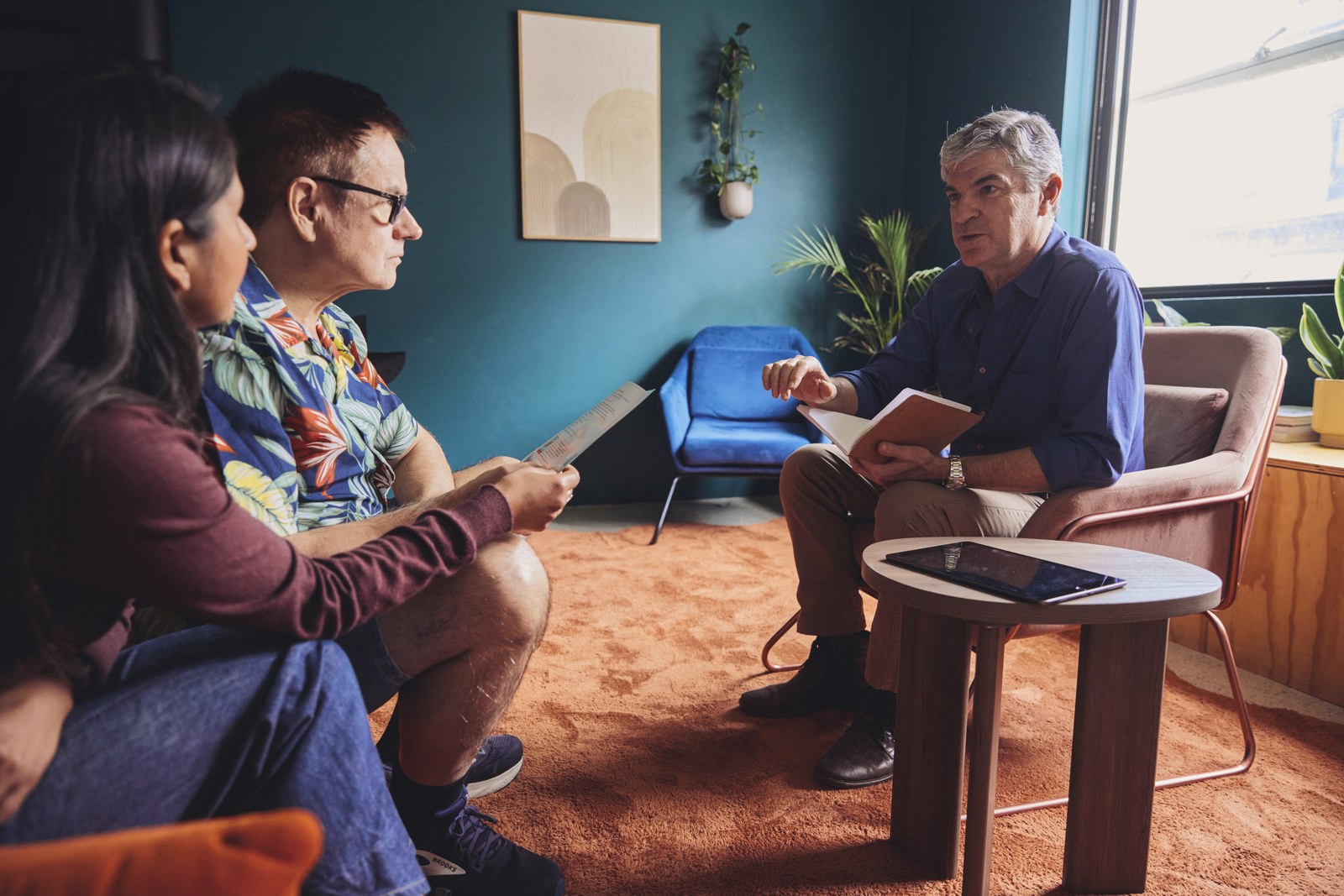
A partner who watches a man stop initiating reaches the conclusion that he has lost interest in them. On ADT they are partly right as the treatment did take away the drive.
However, they may be incorrect on the rest. The relationship has not gone, and in many couples the closeness survives even though the desire is gone.
The partner has a reaction to the body changes too and is rarely asked about it.
Neither of them is likely to raise any of this without being asked.
Tell them both what ADT has taken from the patient's desire and what it has left of their relationship.
3.9 Androgen deprivation therapy
How to ask about desire when the treatment has suppressed it
Most men on ADT report that their sex drive is reduced or gone. A minority keep it.
Sexual activity is not driven by desire alone. As Basson's model showed, desire can follow arousal rather than come before it6. So, ask the patient what desire he still has, and what he and his partner still want from their sex life.
What looks like lost desire is often exhaustion. Fatigue, hot flushes, disturbed sleep and loss of initiative are all common on ADT, and all of them make starting anything harder. A man too tired to begin is not the same as a man who does not want to.
Which would you ask first? Choose one.
Choose one option.
Ask what is left rather than what is gone. B gives him something to describe; A asks him to repeat a change he already knows about and has been told to expect.
Then separate the tiredness from the wanting, and ask what the two of them still do.
ASK
- When you don't start something, is it that you don't feel like it, or that you're too tired to?
- What are the two of you still doing together that you'd both call intimate?
If a couple say sex is finished for them:
ASK
- That's a decision you're allowed to make. Can I check you're both making it?
Watch a man describe it himself
Bruce, on sex after prostate cancer
You have just read how to ask a man what desire he has left. Bruce answers that question without being asked it. He was diagnosed with advanced prostate cancer and has had radiotherapy, hormone therapy and chemotherapy, and he talks to camera about what the treatment did to his sex life and what he did about it.
Everywhere else in this module a patient reaches you through a clinician. This is the one place a man speaks for himself.
Bruce Tasker
0:01I'm Bruce Tasker, I was diagnosed with early advanced prostate cancer in May 2009.
0:08My treatment so far has been radiotherapy, hormone therapy and chemotherapy.
0:18After I was diagnosed, they immediately put me on hormone therapy which involves, for me, an injection every 12 weeks and I also take daily tablets which stops the production of testosterone.
0:35Your desire to have sex wanes, it disappears. It has affected all of my sexual organs and there is nothing you can do to prevent it. The psychosexual effects are quite extreme and I did, for quite a considerable amount of time, I started questioning: "was I still a man?"
1:00There's lots of bits and pieces that just act differently.
1:05But has that stopped me from having sex?
1:08No, not at all and starting a new relationship was actually relatively simple and really good because I found - I think as a man, you think that relationships are based on sex - and what I found is that, in trying to understand relationships more, it's changed my whole perspective on what actually a relationship is about and I'm glad to say that it's actually for the better. Yeah we still have sex, but in different ways and with a little bit of medical intervention, but it doesn't take away from the intimacy of the moment.
1:50My libido is different. I don't think about sex as much as I used to, but I do think about it consciously now and I want to be more loving and the sex side of it is part of that, but it's not the only part of it.
2:08I think it's a very important thing that when you get cancer and particularly prostate cancer, which is going to interfere with your sex life, that you talk about it as a couple - what it means - because it might be that to your partner, actually, it doesn't matter at all.
2:27It might be that your partner is absolutely freaked out by it.
2:31The forgotten people are the partners who are absolutely beside themselves with worry.
2:40So I think that talking about it is really important because it's about staying together as a couple, it's about being loving and helpful and being together and sex is only part of that but you don't want it to be a part of it that will actually break you apart.
2:58To me the essence of a man is about what you do in life.
3:03It's about being that bread winner, being that father. That helped me a lot and I'm still my children's father. I'm still a man.
Listen for two things. He says the desire went and that he started a new relationship anyway. And he calls partners the forgotten people, which is the argument of this lesson in a patient's own words.
You are watching the full film, which runs 3 minutes 42 seconds.
3.9 Androgen deprivation therapy
What ADT leaves intact
The treatment does not take everything. ADT flattens desire, and that is usually its dominant effect. It also changes orgasm including altered sensation, difficulty reaching orgasm or anorgasmia. Statement 37 asks you to identify these and say they can be managed within a biopsychosocial approach7.

What ADT does not touch is affection. Touch, being held, showering together, a night away – none of those depend on testosterone and all four were on Doug's plan for different reasons.
So you are offering a couple on ADT the same things you offer everywhere else in this module. What changes is its status. Elsewhere it sits alongside a medical treatment. Here it is the treatment.
Say that to the couple explicitly. If you don't, they will hear it as what's left over once the real options have run out.
Make it the plan, and tell the couple that is what you are doing.
3.9 Androgen deprivation therapy
Knowledge check
A man three months into ADT alongside radiotherapy tells you he has no interest in sex at all and that his partner has stopped suggesting anything. He also mentions he is exhausted, sleeping badly, and has put on weight that will not come off.
Tick every option that belongs, then check.
Tick at least one before checking.
3.9 Androgen deprivation therapy
Think of a patient you have seen on ADT.
What did he or his partner tell you about desire, and what did you do with it?
Write down one thing you would ask differently next time.
3.9 Androgen deprivation therapy
What you can do now
Which two will you use in your next appointment?
Choose up to two, and a space to write a note opens underneath. All of these are saved to your conversation guide either way.
Marked for your next appointment.
These are saved for you, with the phrasings from this lesson, in the conversation guide on the resources screen at the end of this module.
References
- Clinical Guidelines for Sexual Health Care in Prostate Cancer (2022), p. 55.
- Clinical Guidelines for Sexual Health Care in Prostate Cancer (2022), p. 55.
- Clinical Guidelines for Sexual Health Care in Prostate Cancer (2022), p. 55.
- Clinical Guidelines for Sexual Health Care in Prostate Cancer (2022), p. 13.
- Clinical Guidelines for Sexual Health Care in Prostate Cancer (2022), p. 55.
- Morck, A.C., McLeod, D.L., & Robinson, J.W. (2011). Sexual function primer. Module prepared for the IPODE project.
- Clinical Guidelines for Sexual Health Care in Prostate Cancer (2022), p. 94.
- Clinical Guidelines for Sexual Health Care in Prostate Cancer (2022), p. 56.
- Clinical Guidelines for Sexual Health Care in Prostate Cancer (2022), p. 98.

What now?
You have reached the end of Module 3, the longest module in this course. Nine lessons and just over four hours, and it is the most demanding stretch so well done!
You can run an appointment with two people in the room and take a goal from each of them, name the closeness a couple still has, and build a plan from it. You can teach sensate focus from the first exercise through to the fourth step, open up what a couple can do that does not depend on an erection, ask a partner about their own sexual health in an appointment the patient came for, and tell a difference in desire from a difference in what each of them can act on.
You can explain penile rehabilitation honestly, including where the evidence is thin, teach a device, find out whether a medication is doing anything, handle the appointment after a treatment has failed, and forewarn a man about androgen deprivation therapy while still leaving him something to do.
Doug and Jean, Andrew and Jeff, and Anthony are the people you have followed through this module.
In Module 4: Inclusive care and your professional practice, the work turns to the people and the situations the rest of the course has not covered. Gay and bisexual men, and men who have sex with men. Transgender women and gender non-conforming people. The boundary problems sexual health care generates. Why sexual health gets left out of care, and what to do when you are the only person asking.
Your reflections
Review everything you wrote during this module, and email or print a copy to keep for your own records.
Resources from this module
Tick the resources you would like to keep, then email them to yourself. Anything you saved as you went along is already ticked for you.
Your reflections
Everything you wrote during this module is still here, on this device. Open it to read it back, print it or email it to yourself.